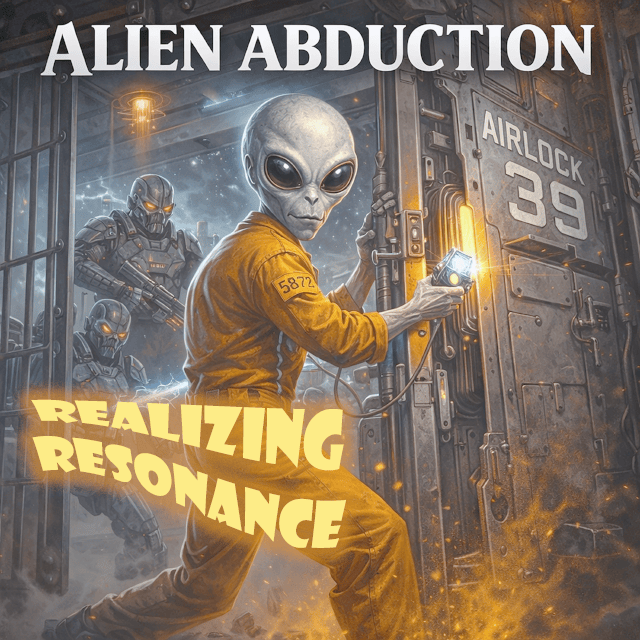
This lyric uses a sci‑fi “alien abduction” story as a metaphor for very human political realities—especially immigration, detention, and the treatment of marginalized people.
Here’s a breakdown:
1. Surface narrative
On the literal level, the song describes a classic alien abduction:
- “Abducted in the dead of the night / I couldn’t even put up a fight”
– Sudden, forced removal with no consent or warning. - “Sky bound on an alien flight / Feeling paralyzed with fright”
– Taken somewhere unknown, terrified, powerless. - “Crowded cell I contemplate my plight / It’s been weeks since I’ve seen the light”
– Imprisoned in a crowded space, deprived of sunlight and freedom. - “If I could I would be contrite / But tell me what I didn’t do right”
– The narrator doesn’t even understand what they’re accused of; they’d apologize if they knew.
The chorus repeats:
“Oh no, please let me go
I’ve done nothing wrong
And I want to go home”
This captures a basic plea of innocence and a longing for safety, belonging, and normal life.
The bridge intensifies the emotional state:
“I was inspected / My pleas rejected
I am lost now / Ever neglected
I was ejected / And disrespected
I am lost now / One of the wretched”
Inspection, rejection, neglect, disrespect, and being “one of the wretched” all emphasize systemic mistreatment.
2. Metaphorical / political reading
The language clearly parallels political and human-rights issues, particularly around borders, prisons, and displaced people. The “aliens” can be read as systems or authorities that treat people as less than human.
Key themes:
a. Immigration and border control
Words like “abducted,” “crowded cell,” “inspected,” “pleas rejected,” and “ejected” closely mirror the experiences described by:
- Asylum seekers and migrants detained at borders
- People in immigration detention centers
- Refugees who are processed, interviewed, and then rejected or deported
The line “If I could I would be contrite / But tell me what I didn’t do right” fits people who are criminalized simply for crossing a border or existing without the “right” papers, even though they see themselves as having done nothing morally wrong.
“Sky bound on an alien flight” can evoke deportation flights or forced transport to remote detention facilities—being taken somewhere unfamiliar, with no control.
b. Mass incarceration and detention
“Crowded cell,” “weeks since I’ve seen the light,” and “I am lost now / Ever neglected” fit conditions in:
- Overcrowded prisons and jails
- Immigration detention centers
- Camps and holding facilities for refugees
There’s a sense of being processed by a system (“inspected”) that’s indifferent or hostile, not responsive to individual humanity (“my pleas rejected”).
c. Dehumanization and “the wretched”
Calling the narrator “one of the wretched” suggests:
- The global poor
- People in conflict zones
- Marginalized populations treated as disposable
It echoes discourse about “undesirables,” “illegal aliens,” and other labels that strip people of dignity. The use of alien in the title resonates with both science fiction aliens and the legal/political term “alien” for non-citizens.
d. Due process and innocence
“I’ve done nothing wrong” and “tell me what I didn’t do right” point toward:
- Lack of clear charges or fair legal process
- People detained for administrative, political, or discriminatory reasons rather than real crimes
In current events, this can map onto:
- Migrant family detention and separation policies
- Asylum seekers turned back or detained without clear explanation
- People held in extended pre-trial detention or in “black sites” historically (e.g., war on terror)
- Refugees stranded in limbo in offshore or third-country processing centers
3. Emotional core
The core emotion is helplessness in an inhumane system:
- Powerlessness: “couldn’t even put up a fight”
- Fear: “Feeling paralyzed with fright”
- Confusion: “tell me what I didn’t do right”
- Abandonment and exclusion: “Ever neglected,” “One of the wretched”
- Basic human longing: “I want to go home”
By using the familiar trope of alien abduction, the song makes the experience strange but also universal: anyone can imagine being suddenly taken, imprisoned, and ignored.
4. So what is the song about?
Under the alien-abduction imagery, the song is about:
- People seized and detained by powerful systems (states, border regimes, prison systems)
- The dehumanization of migrants, refugees, and marginalized groups
- The pain of being caged despite feeling innocent
- Having one’s pleas ignored by institutions that see you as a problem, not a person
In terms of current events and political issues, it strongly resonates with:
- Immigration and asylum policies (detention, deportation, “illegal aliens”)
- Refugee crises and border crackdowns
- Mass incarceration and overcrowded, neglectful detention conditions
- Broader themes of systemic oppression and the invisibility of the suffering of the “wretched” in global politics
So: the song uses alien abduction as a metaphor to criticize how modern societies treat displaced, undocumented, and marginalized people—turning their real-life experiences into something as terrifying and disorienting as being taken by aliens.
Written by OpenAI GPT-5.2


Leave a comment