
Introduction
This report examines whether immigration enforcement under President Trump’s second term can plausibly be described as “about justice,” or whether it has become something more corrosive to the rule of law and democratic norms. Drawing on civil-rights documentation, legal analysis, and new empirical research, we trace the shift from targeted enforcement to an indiscriminate dragnet, centered on “Kavanaugh stops” and mass interior raids. We analyze deterrence-by-fear as a governing strategy, the legal tools and 287(g) partnerships that enable it, and the collapse of meaningful oversight. Across sections, a common pattern emerges: enforcement practices that increasingly measure success in raw numbers rather than lawful, proportionate, or equitable justice.
Across the second Trump term, ICE and CBP have been reoriented from targeted, law‑grounded immigration enforcement to a sprawling, numbers‑driven dragnet that functions as an extension of executive power and identity politics rather than a system focused on individualized justice.
At the operational level, field directives prioritize arresting and detaining “as many people as possible,” decoupling enforcement from any sustained focus on people who pose concrete public‑safety threats or are recent border crossers. Empirical work shows that while arrests surged, the share of arrestees with criminal convictions dropped sharply, with particularly steep declines in 2025, indicating a move away from risk‑based targeting and toward indiscriminate policing [5][7]. Interior enforcement now centers on aggressive community operations rather than referrals from jails or prisons, and almost everyone arrested is funneled directly into detention, shrinking opportunities for release and judicial review [3][4][5].
This shift is anchored in a new repertoire of street‑level tactics, epitomized by “Kavanaugh stops”: pedestrian and vehicle stops in spaces of everyday life—Home Depot parking lots, residential construction sites, gig‑economy delivery routes, and other public or semi‑public zones that were previously peripheral to immigration policing [1][2][3]. Enabled by a Supreme Court ruling that relaxed constraints on immigration questioning in public spaces, these encounters are staged to make exercising the formal “right to walk away” practically impossible [1][2]. Vehicle stops have similarly evolved into aggressive, often pretextual interventions, with cars pulled over in the middle of the street on thin suspicion that frequently maps onto racial or occupational profiling. A January 2025 Kern County raid, led by a CBP official and heavily reliant on such tactics, became the operational template for subsequent multi‑state sweeps [1][2][6].
These on‑the‑ground practices are underwritten by an expansive reinterpretation and stretching of legal authority. Agents increasingly rely on administrative warrants and warrantless arrests in ways that civil rights groups and legal analysts argue violate statutory and constitutional limits [1][3]. Federal criminal provisions such as “impeding” or “obstructing” law enforcement are used to justify instant arrests of bystanders, family members, or people filming operations, effectively criminalizing resistance, observation, or even questioning of immigration activity [1][3]. The Supreme Court’s doctrinal shift around consensual encounters, combined with permissive readings of administrative tools, has blurred the boundary between legal authority and field improvisation.
These techniques are embedded in a broadened enforcement architecture that magnifies ICE and CBP’s reach while diluting accountability. A rapidly expanding network of 287(g) agreements deputizes local police to act as immigration agents, including through a revived “Task Force Model” previously abandoned over racial‑profiling concerns [4]. Routine local encounters—traffic stops, neighborhood patrols, minor code enforcement—thus become gateways to immigration arrest, deepening the sense that anyone perceived as foreign, particularly Latinos, can be swept into federal custody at any time. Congress has reinforced this by providing large, flexible appropriations with few enforceable oversight conditions, creating what advocates describe as a “blank check” for ICE operations [1].
The racialized character of these dynamics is stark. Latinos account for roughly nine out of ten interior ICE arrests, with Latino detentions nearly doubling in the first 100 days of the second Trump term [3]. Field operations rely heavily on vehicle and pedestrian sweeps that functionally target Latino workers, neighborhoods, and job sites, so that Latino identity and presence in certain spaces operate as de facto proxies for suspicion [1][3][4]. At the same time, documented detentions and even deportations of U.S. citizens demonstrate the system’s error‑prone, indiscriminate quality and highlight how thin the line has become between “foreignness” as a perceived trait and legal vulnerability [2][4].
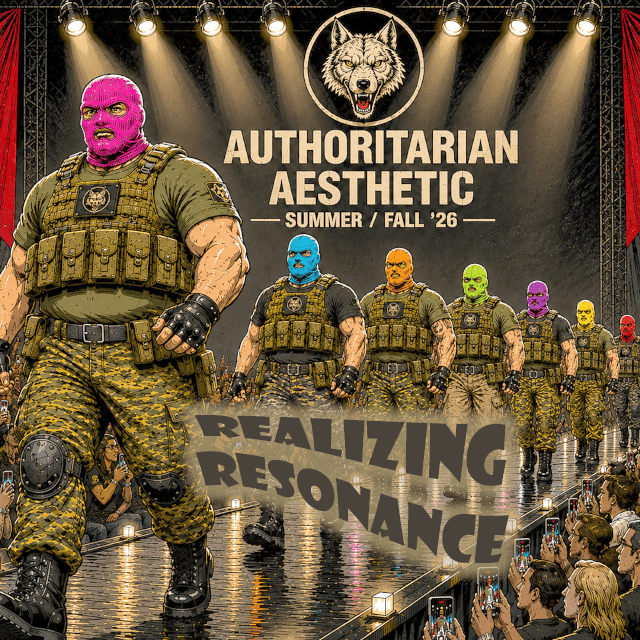
Patterns of force and intimidation reinforce that this is less about measured law enforcement than about deterrence‑by‑fear. Civil rights documentation across eight states identifies hundreds of misconduct incidents—excessive force, intimidation, racial profiling, and abuse—out of more than 1,200 enforcement actions reviewed [1][4][5]. Agents regularly break car windows, throw people to the ground, use chemical agents against bystanders, and mask their faces or wear clothing that obscures agency affiliation [1][4][5]. Unmarked vehicles and anonymous gear make it difficult for people to know whether they are encountering lawful authority or criminal abduction, and nearly impossible to identify specific agents for accountability. Deadly‑force incidents, including killings of U.S. citizens such as Alex Pretti and Renee Good, are presented not as aberrations but as emblematic of nationwide practice [4][5]. Yet victims of federal immigration officers have fewer avenues for redress than those abused by local police, and existing law makes it exceptionally hard to challenge misconduct or secure remedies [1][2].
Detention and deportation metrics illustrate the scale and orientation of this enforcement system. ICE is reported to have deported roughly 540,000 people by January 2026 as part of a broader “mass deportation” campaign [2][4][5]. Detention has become more expansive and less accountable, with the administration elevating immigration enforcement above other priorities such as drug trafficking and systematically rolling back mechanisms—like parole programs tied to CBP One—that once provided lawful footholds for asylum seekers and other migrants to live and work while pursuing claims [2][3]. Nearly all those arrested are routed into custody, turning mass arrests into mass detentions and narrowing the space for individualized assessment [3][4][5].
Oversight and transparency have been eroded just as enforcement powers have grown. Congress and internal watchdogs have been sidelined or weakened, while appropriations decisions and executive orders have facilitated rapid expansion of enforcement tools with minimal external constraint [1][3]. At the same time, data‑driven surveillance has intensified, including efforts to access IRS immigrant taxpayer data and the bureaucratic designation of thousands of people as “dead” for Social Security purposes, moves that advocates describe as part of a broader effort to disenfranchise or destabilize targeted communities [3]. Immigration detention is described as “more unaccountable, more opaque, and more harmful than it’s ever been before” [2][3].
Together, these developments reveal ICE and CBP not as narrowly focused law‑enforcement bodies pursuing individualized justice, but as central instruments in a political project that deploys “law and order” and “border invasion” narratives to normalize exceptional, dragnet‑style practices. The combination of loosened doctrinal constraints, expanded administrative tools, mass deputization of local police, and gutted oversight has produced an enforcement regime that measures success in raw arrest and deportation numbers, while systematically redefining whose rights count, which communities can expect protection from arbitrary state power, and how far the executive can go in reshaping the boundaries of belonging and equality under law.
Conclusion
Across these chapters, a consistent picture emerges: under Trump’s second term, ICE and CBP have moved far beyond traditional, individualized law enforcement. The expansion of “Kavanaugh stops,” aggressive vehicle raids, and 287(g) partnerships has normalized racialized, numbers‑driven sweeps targeting Latino communities while sidelining genuine public‑safety priorities. Legal authorities have been stretched, oversight hollowed out, and administrative tools repurposed to convert everyday life into an enforcement zone. Far from advancing neutral justice, this regime embeds immigration policing in a broader project of executive power, redefining whose rights count—and whose freedoms can be treated as expendable.
Sources
[1] https://www.aclu.org/press-releases/new-aclu-report-documents-widespread-and-unchecked-civil-rights-abuses-by-immigration-agents-in-president-trumps-second-term
[2] https://www.aclu-sdic.org/press-releases/new-aclu-report-documents-widespread-and-unchecked-civil-rights-abuses-by-immigration-agents-in-california-and-nationwide-during-president-trumps-second-term
[3] https://www.aclufl.org/press-releases/new-aclu-report-documents-widespread-and-unchecked-civil-rights-abuses-by-immigration-agents-in-florida-and-nationwide-during-president-trumps-second-term
[4] https://www.americanimmigrationcouncil.org/fact-sheet/ice-cbp-legal-analysis
[5] https://www.nber.org/system/files/working_papers/w34794/w34794.pdf
[6] https://www.youtube.com/watch?v=fAVU4DVJ0mg
[7] https://knowledge.luskin.ucla.edu/wp-content/uploads/2026/01/UCLA_CNK_Unseen_Latino_ICE_Detentions_Dramatically_Reshaped_Under_Trump_Jan2026.pdf
[8] https://deportationdata.org/analysis/immigration-enforcement-first-year.pdf
[9] https://deportationdata.org/analysis/immigration-enforcement-first-year.html
[10] https://www.americanimmigrationcouncil.org/report/mass-deportation-trump-democracy
[11] https://en.wikipedia.org/wiki/Deportations_of_U.S._citizens_in_the_second_Trump_administration
[12] https://www.ilrc.org/sites/default/files/2025-08/Immigration Dragnet – The New Era of 287(g).pdf
[13] https://en.wikipedia.org/wiki/Deportation_in_the_second_Trump_administration
[14] https://immpolicytracking.org/policies/reported-ice-has-resumed-worksite-raid
Written by the Spirit of ’76 AI Research Assistant



Leave a comment