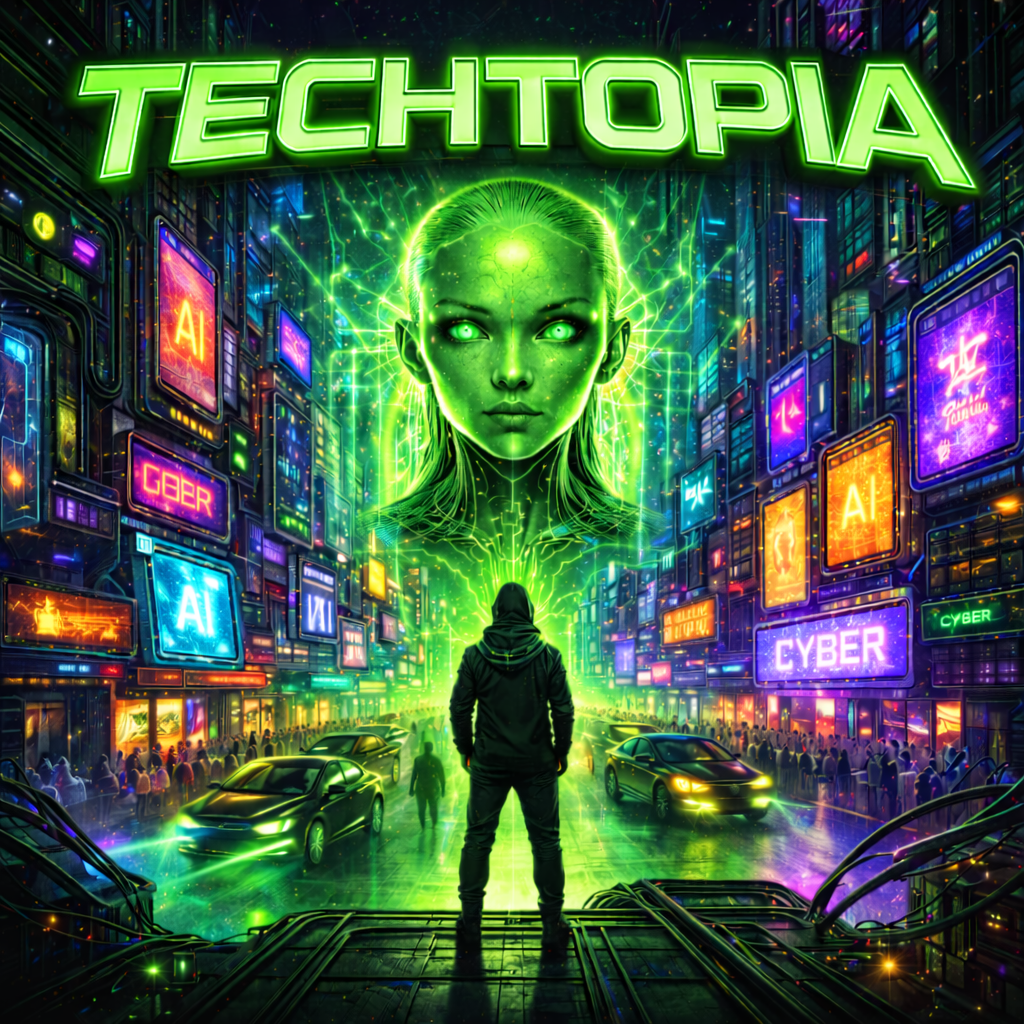
10) “The Future’s So Bright, I Gotta Wear Shades” — Timbuk 3
What the lyrics say: It’s a cheery-sounding song that’s actually about a future built on high-tech power and the moral blindness that can come with it. The narrator has career confidence because he’s positioned in a lucrative, science-driven economy—hinted to be defense/nuclear-adjacent.
How it ties to future/tech change: The “bright” future is both economic opportunity and literal/figurative radiation glare—a satire of technological progress that benefits the few while carrying huge societal risk.
Lyric points: The repeated hook “The future’s so bright, I gotta wear shades” frames progress as dazzling but dangerous—suggesting a future so “bright” you can’t look at it directly.
9) “Are ‘Friends’ Electric?” — Gary Numan / Tubeway Army
What the lyrics say: A bleak, alienated vignette where human relationships are replaced or mediated by technology—companionship becomes purchasable, interchangeable, and emotionally hollow.
How it ties to future/tech change: It anticipates synthetic intimacy and a world where “friends” might be devices, robots, or services—raising questions about what counts as a real relationship when technology can simulate one.
Lyric points: The title question “Are ‘friends’ electric?” itself is the thesis: if “friendship” can be electric, then it can be manufactured. The song’s mood (cold, transactional) reinforces tech as a substitute for human warmth.
8) “Technologic” — Daft Punk
What the lyrics say: A chant-like list of commands that sounds like a human being trained by interfaces and consumer routines—actions become button-press imperatives.
How it ties to future/tech change: It captures the automation of daily life and how digital systems condition people into repetitive “do this next” behaviors—workflows, shopping, content consumption—until living feels like operating software.
Lyric points: The repeated instruction pattern (e.g., the iconic sequence built around “Buy it, use it, break it, fix it…”) portrays a loop of consumption and device-dependence—technology as both habit and master.
7) “Mr. Roboto” — Styx
What the lyrics say: A person hides behind a robotic disguise; the robot becomes both mask and prison. The lyrics play with deception, identity, and control—who’s piloting whom?
How it ties to future/tech change: It’s about human identity under mechanization: when people adopt technological roles/masks, they can lose autonomy—becoming tools of systems they created. It also hints at surveillance and engineered personas.
Lyric points: The robotic greeting “Domo arigato, Mr. Roboto” functions like branding or a programmed line—suggesting a world where interactions are scripted. And “I need to be cleansed / The secret lies within” (from the song’s arc) pushes the idea that the human self is trapped inside the tech persona.
6) “Tech Boys” — The God’s Themselves
What the lyrics say: A furious critique of tech-bro culture: corporate conformity, overwork, status badges, and a shallow “there’s an app for that” solutionism applied to human misery and social harm.
How it ties to future/tech change: It attacks the idea that technology automatically equals progress. Instead, it shows tech as a machine that monetizes alienation—turning everything (even loneliness, gentrification, humiliation) into a product feature.
Lyric points (quoted):
- Corporate identity + emasculating conformity: “And your blue badge / And your limp dick / With mouth full / Of the party line”
- The worship of overwork: “And your weekends / Working overtime” followed by the relentless chant “Overtime”
- Solutionism as satire: “Titillation / We got an app for that… Desperation / We got an app for that… Gentrification / We got an app for that… Isolation / We got an app for that”
- Algorithmic control as something you’re told to feel: “You gotta feel that rhythm / That algorithm” —technology isn’t just a tool; it becomes the beat your life is forced to move to.
5) “Fiction (Dreams in Digital)” — Orgy
What the lyrics say: A noir-ish portrait of desire, identity, and reality dissolving into screens—relationships and selfhood become “digital dreams,” seductive but unreal.
How it ties to future/tech change: It reflects anxieties about virtual life overtaking physical life—technology as an intoxicant that blurs truth and turns intimacy into simulation.
Lyric points: The central phrase “dreams in digital” frames technology as a space where longing can be endlessly projected—beautiful, but potentially fictional and emotionally destabilizing.
4) “The Future” — Leonard Cohen
What the lyrics say: A prophetic, grim collage of social breakdown—politics, violence, and moral exhaustion—where the promised “future” arrives as something dark and coercive rather than liberating.
How it ties to future/tech change: While not “gadgets-forward,” it fits the future/tech theme by portraying modernity’s momentum: institutions, media, and systems accelerating toward dehumanization. It’s the future as dystopian outcome of “progress.”
Lyric points: Cohen’s refrain “I’ve seen the future, brother: it is murder” reduces the utopian story of progress to a brutal verdict—what comes next isn’t enlightenment; it’s collapse with machinery behind it.
3) “Future World” — Helloween
What the lyrics say: A power-metal vision of tomorrow that’s excited and idealized—humanity breaking limits, reaching for a better world, and embracing what comes next.
How it ties to future/tech change: It represents the optimistic side of technological change: progress as liberation, exploration, and building something beyond current constraints.
Lyric points: The repeated aspiration “Welcome to the future world” works like an open door—inviting the listener into a transformed era where tomorrow is an achievement, not a threat.
2) “In the Year 2525 (Exordium & Terminus)” — Zager & Evans
What the lyrics say: A timeline of the far future where technology steadily replaces human choice—thinking, reproduction, and even emotion become engineered until humanity seems to fade.
How it ties to future/tech change: It’s a classic warning about technological determinism: convenience becomes control; innovation becomes extinction-by-optimization.
Lyric points: The escalating predictions are the point—humans increasingly don’t do anything themselves. The song’s premise “In the year 2525…” sets a cold, long-view thought experiment: if tech keeps “improving,” what happens to being human?
1) “The Final Countdown” — Europe
What the lyrics say: A dramatic send-off: leaving Earth, heading into the unknown, counting down to a leap that might be triumph or doom.
How it ties to future/tech change: It turns the future into a space-age threshold moment—technology (rockets, exploration) enabling a species-level transition, while the lyrics keep the emotional ambiguity: excitement, fear, irrevocability.
Lyric points: “It’s the final countdown” frames technological departure as a point of no return. And the idea of “leaving together” gives the future a collective stakes: tech isn’t just personal—it’s civilizational.


Leave a Reply