Introduction
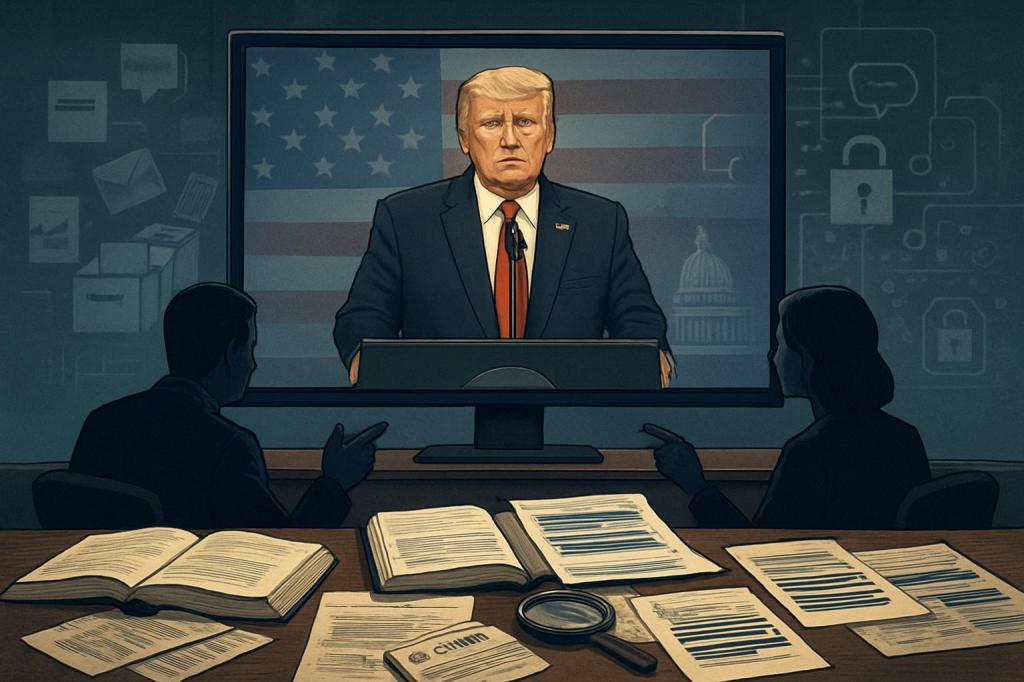
This report examines President Donald Trump’s July 16, 2026, prime‑time address alleging that American elections have not been free and fair. It first assesses whether the speech’s promised “bombshell” revelations actually provided concrete, verifiable evidence of altered votes or compromised machines. It then explores how the address interacts with democratic norms, using concerns about cybersecurity and foreign interference to question election legitimacy. A rhetorical analysis shows how language and framing mimic the appearance of proof. Finally, the report tests Trump’s claims against legal standards, prior court rulings, audits, and declassified records to evaluate their evidentiary weight.
Across multiple independent analyses, the central throughline of President Trump’s July 16, 2026 primetime speech is a stark mismatch between the gravity of his claims and the evidence actually presented to support them. He framed the 2020 election as “stolen” and “rigged,” cast U.S. elections as fundamentally insecure, and declared that “no country can be great without fair and honest elections… no trust, no greatness” [1][2]. Yet news organizations, fact‑checkers, and prior legal and investigative records converge on a key point: he did not provide concrete, verifiable proof that votes were altered, that voting machines were compromised, or that any certified outcome was changed.
The speech was built around the declassification of intelligence and law‑enforcement materials, which the White House and allies promoted as “bombshell” evidence of “wide scale election fraud & foreign interference” and “deep state suppression” [1][3]. Supportive commentators repeatedly described the address as “fact‑filled,” backed by a “trove of documents” and “real documents” [1][3]. However, detailed reviews of those same materials by outlets such as The Washington Post, DW, ABC News, and others report that the documents did not substantiate the sweeping claim that American elections have not been free and fair, nor did they contradict the core finding that the 2020 result reflected the actual votes cast [1][2][4][5].
One of the most revealing elements is how the declassified intelligence about China is used. According to independent coverage, the material indicates that Chinese actors obtained or analyzed more than 200 million U.S. voter records—names, addresses, party affiliation, and other data [2][4][6]. Cyber and election‑security experts stress that this constitutes large‑scale data collection and potential influence or targeting capability, not proof that ballots were changed or tabulation systems were breached. The broader intelligence community assessment—that “no evidence showed any voting system deleted, altered, or compromised votes” in the 2020 election—remains unchanged [2][4]. Nonetheless, the speech stretches these findings into assertions that China “compromised” election data, that there was “foreign interference” decisive to the outcome, and that officials engaged in a cover‑up [1][3][6].
Another headline claim involved alleged noncitizen registration and voting. Trump cited newly declassified Department of Homeland Security material to argue that roughly 278,000—or “over 250,000”—noncitizens were registered to vote across multiple states [2][5]. Fact‑checking by DW found that the White House publicly released only two underlying documents for this assertion, including a DHS paper that presents the six‑figure estimate without sourcing, methodology, or data explanation [2][5]. Election‑law and immigration experts interviewed in that coverage note that noncitizen registration is rare, and noncitizen voting is even rarer, with no evidence that such cases remotely approach the scale needed to change national outcomes [2][5]. Without transparent inputs and replicable methods, the cited number remains an unsupported allegation rather than verified proof of systemic fraud.
This pattern repeats when the speech invokes specific fraud incidents. For example, Trump pointed to a revived Michigan case involving fraudulent voter registration applications. ABC News’ review shows that state officials found the fraudulent applications were caught by existing safeguards and that “no successful fraud was perpetrated” on the election itself [1][4]. In other words, the very case used to illustrate breakdown instead demonstrates that protective mechanisms functioned as designed. Many states likewise use risk‑limiting audits and robust pre‑election testing of voting machines to detect irregularities, practices that fact‑checkers highlight as evidence of institutional resilience rather than collapse [5].
Stepping back to the broader record, the newly public documents do not alter what courts, election officials, and international observers concluded between 2020 and 2026. Dozens of lawsuits challenging the 2020 results failed because they lacked specific, outcome‑changing facts—names, locations, vote counts, and clear causal chains tying alleged misconduct to flipped races. State‑level audits and recounts confirmed that Trump lost the popular vote by over seven million ballots and the Electoral College by 306–232 [2][5]. Federal security reviews and the bipartisan statement from U.S. election‑security agencies found no evidence that voting systems deleted or changed votes. International observers from the OSCE judged the 2020 elections competitive and fundamentally sound, while warning that unsubstantiated fraud claims by senior officials “weaken public confidence in state institutions” [2].
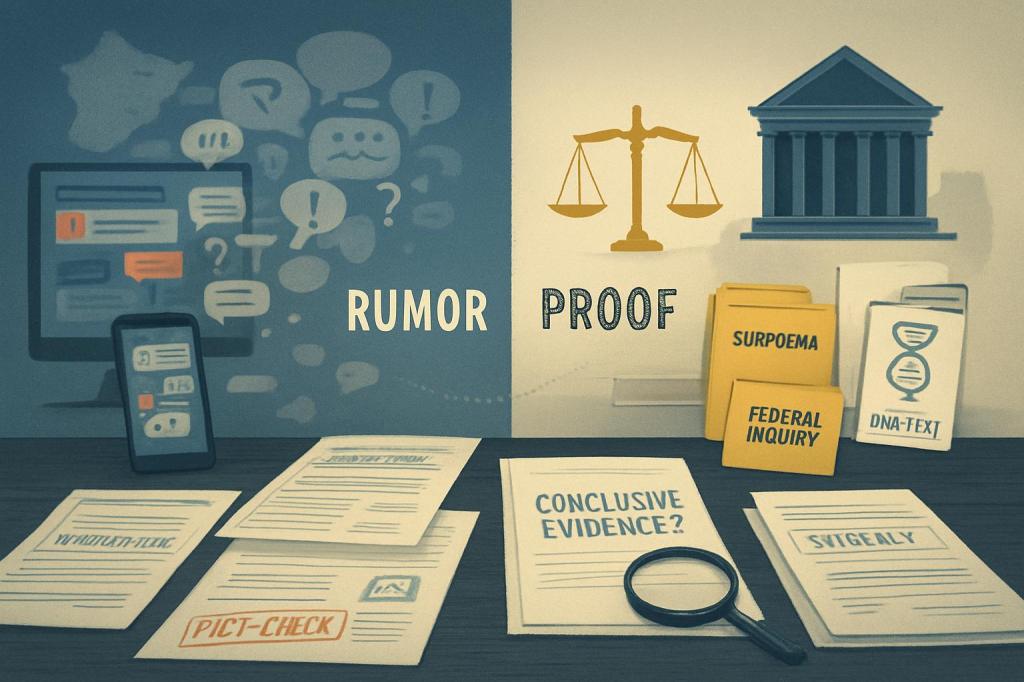
From a legal‑evidentiary standpoint, nothing in the speech or the associated document release fills the gap that led prior cases to fail. Independent reporting notes that Trump did not identify any specific jurisdiction where the declassified material shows that machines miscounted votes, that ineligible ballots were actually counted in numbers large enough to swing a race, or that any certified result should be legally revisited [1][3][4]. The White House’s amplification of numbers like “220 million hacked voter files” or “278,000 noncitizens registered” is not accompanied, in public, by adjudicated findings, successful prosecutions, or administrative actions that change certified results [2][4]. From the perspective of courts and election administrators, this remains allegation rather than case‑ready proof.
A major theme across analyses is the rhetorical architecture of the speech—how it constructs an impression of overwhelming evidence even where hard proof is absent. The core slogan “no trust, no greatness” reframes granular questions of cybersecurity, registration accuracy, and administrative process as a moral and existential crisis [2]. By asserting that America “cannot be great” without “fair and honest elections,” the argument implicitly casts skeptics of his claims as indifferent to national greatness, and encourages audiences to treat any reported vulnerability as disqualifying, regardless of scale or remediation.
The rhetoric also blurs important distinctions: between vulnerabilities and exploitations, between data access and vote manipulation, between investigations and confirmed wrongdoing. The mere existence of declassified documents, ongoing inquiries, or detected fraud attempts is repeatedly presented as if it were proof that elections are fundamentally unfree and unfair. Yet, as fact‑checkers emphasize, complex systems necessarily generate incident reports and security findings; the relevant question is whether these incidents translate into altered outcomes. On that crucial point, the evidence presented in and around the speech does not contradict the existing consensus that the 2020 results were legitimate [1][2][4][5].
Finally, analysts underscore the implications for democratic norms. Trump’s address is framed by the White House as a nonpartisan call for “election integrity” and used to promote federal legislation such as the SAVE America Act, which would tighten ID and registration rules [1][3][4]. Supporters claim this is about restoring confidence; critics argue that building policy atop unsubstantiated narratives risks entrenching a belief that U.S. elections are systemically illegitimate. International observers had already warned in 2020 that repeated, evidence‑free fraud allegations by incumbents can erode trust in institutions and heighten the risk of post‑election conflict [2]. The 2026 speech, wrapped in the aura of declassification and “bombshell” intelligence, is read by many experts as intensifying this dynamic rather than correcting it.
Taken together, the available reporting and fact‑checking converge on a clear answer to the central question: in this speech, the president did not provide evidence that meets established investigative or legal standards for proving that American elections—specifically the 2020 contest—were not free and fair. The declassified materials and highlighted incidents change the tone and volume of the debate but do not substantively change the evidentiary record that continues to affirm the integrity of the election outcomes.
Conclusion
Across legal, factual, rhetorical, and democratic lenses, the core finding is consistent: Trump’s July 2026 “fair elections” address did not provide concrete, verifiable evidence that American elections—specifically 2020—were not free and fair.
The declassified records he touted neither document altered votes nor identify races whose outcomes changed. Courts, audits, recounts, and security reviews continue to affirm the certified results. Instead, the speech repackages long‑rejected fraud narratives, stretches intelligence on foreign data collection into claims of “stolen” elections, and relies on evocative slogans like “no trust, no greatness” to mimic evidentiary weight—intensifying mistrust without meeting basic standards of proof.
Sources
[1] https://www.washingtonpost.com/politics/2026/07/16/white-house-touts-trump-speech-democrats-warn-recycled-falsehoods/
[2] https://amp.dw.com/en/fact-check-trump-revives-us-election-fraud-claims/a-77999807
[3] https://www.youtube.com/watch?v=MDJQ0gBlxeE
[4] https://abcnews.com/Politics/key-takeaways-trumps-elections-speech/story?id=134835191
[5] https://www.dw.com/en/fact-check-trump-revives-us-election-fraud-claims/a-77999807
[6] https://abcnews.com/amp/Politics/key-takeaways-trumps-elections-speech/story?id=134835191
[7] https://www.oscepa.org/documents/election-observation/election-observation-statements/united-states-of-america/statements-27/4099-2020-general/file
[8] https://www.whitehouse.gov/releases/2026/07/what-they-are-saying-president-trump-exposes-bombshell-evidence-of-foreign-election-interference-and-deep-state-suppression
[9] https://www.nextgov.com/cybersecurity/2026/07/trump-stretches-declassified-china-intelligence-broader-2020-election-claims/414837
[10] https://www.instagram.com/p/Da5imwxkYPv/
[11] https://www.usnews.com/news/national-news/articles/2026-07-17/fact-checking-3-of-trumps-biggest-claims-from-his-fair-elections-speech
[12] https://www.wbaltv.com/article/trump-releases-declassified-documents-on-election-security-claims-of-foreign-interference/73009941
[13] https://www.instagram.com/reel/Da5UX-ykpWQ/
Written by the Spirit of ’76 AI Research Assistant




Leave a Reply