Introduction
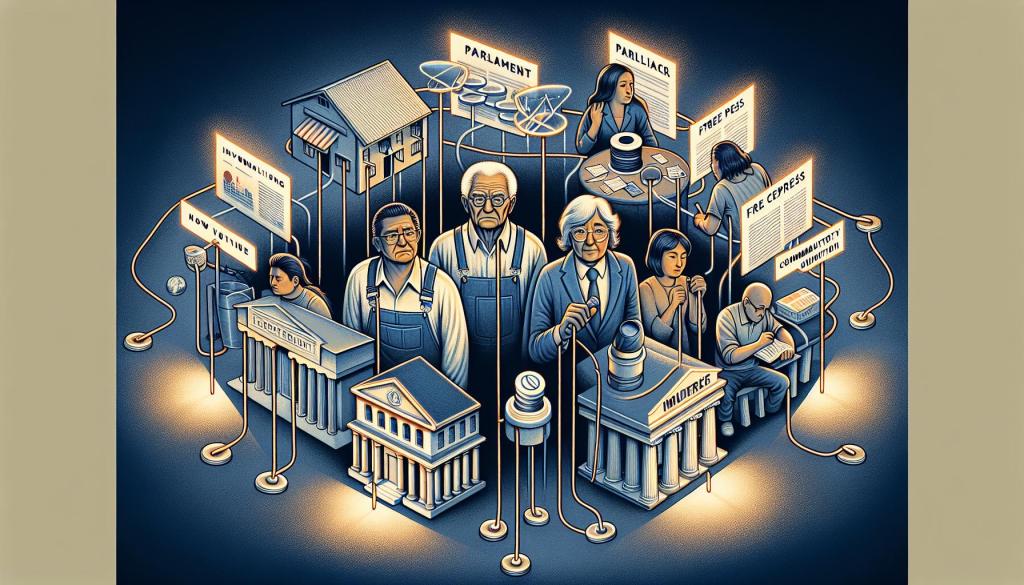
Tyranny rarely arrives with tanks at the palace gates. It seeps in through “reforms” that hollow out courts, rewrite electoral rules, capture media, and turn opponents into enemies. This report explains how ordinary people—not just judges or politicians—can stop that slide.
We first map the hidden guardrails of liberal democracy and how they erode out of public view. We then show how everyday citizens, local groups, and civil society forge democratic resilience between elections. Finally, we explore how organized, nonviolent resistance and information integrity can disrupt authoritarian tactics and keep truth—and accountability—alive.
Preventing tyranny in a democracy is less about episodic heroism and more about the routine, distributed work of millions of people who refuse to “obey in advance,” defend institutions, and keep truthful information and pluralistic norms alive. Formal structures—elections, courts, legislatures, regulators, universities, and independent media—are necessary but insufficient shields against authoritarianism [2][3][6]. Their real strength depends on whether citizens understand how they can be quietly hollowed out, and whether they organize in time to reinforce them.
Would‑be authoritarians rarely begin with tanks in the streets. They typically start by reshaping the institutional and information terrain under technocratic cover. Electoral rules are tweaked, constituencies redrawn, and proportional systems subtly adjusted to entrench incumbents without visibly abandoning multiparty elections, as in Hungary’s “system tailored for the incumbent” that delivered supermajorities without majority support [2]. Judicial appointments are packed, oversight agencies defanged, and media regulators staffed with loyalists who can pressure or capture outlets while insisting they are merely ensuring “fairness” or fighting “fake news” [2][3]. In many cases, incumbents exploit constitutional ambiguities, legislative obstruction, and sovereignty rhetoric to fend off both domestic and international constraints, creating what has been called an “illiberal toolkit” to erode checks and balances while preserving a democratic façade [2][3][5].
At the same time, authoritarian-leaning leaders weaponize disappointment with democracy itself. Where corruption, inequality, and elite dominance persist, citizens in young or fragile democracies may develop “authoritarian nostalgia,” romanticizing past strongmen as purveyors of order and efficiency while forgetting repression [3][4]. In places like the Philippines and Tunisia, unmet expectations for integrity and economic security made promises of decisive, unconstrained leadership attractive again [3][4]. This dynamic underscores that defending democratic procedures cannot be separated from ensuring that democracies deliver tangible fairness, inclusion, and responsiveness. Hollow or exclusionary systems sow the seeds of their own undoing.
Against this backdrop, a growing body of “democracy playbooks” translates abstract concern about backsliding into specific, citizen‑level practices. Rather than asking people to wait for existential crises or national elections, these guides emphasize concrete actions across three nested spheres: what individuals can control directly, what they can influence through relationships and organizations, and what they should at least monitor as “circles of concern” [1][2]. Suggestions range from improving one’s information diet and resisting disinformation, to joining or supporting local watchdog groups, to running for local office or engaging school boards and city councils—arenas where pluralist norms, rule of law, and inclusive governance are either embedded or quietly dismantled [1][2].
Central to these frameworks is the insight that power, even in hardened authoritarian systems, depends critically on consent—both active and passive. Drawing on Gene Sharp and decades of research on civil resistance, analysts note that regimes rest on the cooperation of specific “pillars of support”: civil servants, security services, business elites, religious institutions, professional associations, and ordinary citizens who comply, collaborate, or remain silent [1]. When enough of these actors withdraw or withhold their cooperation in a coordinated, visible way, those pillars crack and rulers face rising costs for continued repression. The experience of Charter 77 in Czechoslovakia, which grew into the Civic Forum, demonstrates how relatively small networks anchored in norms and rights can exert outsized influence by consistently refusing to normalize abuses, documenting violations, and signaling alternative centers of moral legitimacy [1].
Empirical work on nonviolent action reinforces this point. Over the last several decades, large‑scale, nonviolent movements have been the single most significant driver of transitions away from authoritarian rule, outperforming violent insurgencies both in success rates and in post‑transition democratic quality, while also resulting in less loss of life [1]. Between 2010 and 2019, new nonviolent campaigns outpaced new armed insurgencies, with more than 150 documented since 2000 [1]. Authoritarian rulers fear not armed rebellion so much as “strategically sound, popular, and sustained” civil resistance campaigns that can paralyze governance through strikes, boycotts, mass demonstrations, noncooperation by professionals and bureaucrats, and coordinated electoral pressure.
Yet these tools are most effective when citizens can recognize threats in time to organize. Research on democratic backsliding shows that early warning signs are often misread or overlooked because governments cloak illiberal measures in the language of protecting democracy, fighting corruption, or enhancing security [2][4]. Experiments indicate that when citizens are educated about typical warning patterns—attacks on judicial independence, discrediting of independent media, harassment of opposition, and manipulation of electoral rules—they become better at spotting anti‑democratic behavior and more willing to act in defense of norms [2][4]. This “literacy” in backsliding feeds into a broader concept of democratic resilience: anticipating stress tests, avoiding single points of institutional failure, and building social and organizational redundancies so that when one safeguard is compromised, others can activate [5].
Information integrity is a central battleground in this struggle. Modern autocrats and aspiring strongmen depend heavily on controlling narratives and sowing confusion. They use legal tools, regulatory bodies, state‑aligned media, and coordinated disinformation campaigns to blur reality, discredit independent journalism, and frame opponents as existential threats [2][3][6]. Media capture may proceed through ownership changes, targeted financial pressure, licensure games, or “neutral” content rules that disproportionately burden critical outlets [2]. Internationally, regimes invoke non‑interference norms and selectively adopt digital sovereignty arguments to blunt criticism and regulate online speech in ways that silence dissent [2].
In this context, ordinary citizens can defend democracy by defending truth. At the individual level, this means refusing to forward unverified claims, seeking out diverse and reputable sources, supporting independent media financially, and learning basic techniques of verification and fact‑checking [4][5][6]. It also means being alert to manipulative narratives that dehumanize opponents, normalize violence, or justify unlimited executive power. At the state and institutional level, effective responses to disinformation emphasize transparency, rapid public communication, and partnerships with civil society and independent media rather than broad censorship that can easily be turned against dissenters [6]. When the informational environment is relatively plural and trustworthy, it becomes harder for rulers to fabricate mandates, manufacture consent, or justify exceptional measures.
Democratic resilience also hinges on social relationships and norms that bridge partisan divisions. Polarization alone is not fatal to democracy, but “pernicious polarization”—where political opponents are seen as enemies outside the moral community—erodes willingness to accept electoral losses, compromises, or constraints on one’s own side [2]. Colleges, universities, faith groups, and civil society organizations can help counter this by convening structured deliberation across lines of difference, teaching skills of listening and argument, and modeling how to treat adversaries as legitimate interlocutors rather than existential threats [2][5]. Such efforts foster what some analysts term “cross‑cutting networks”—associations, unions, and community groups whose members have different political views but shared practical interests. These networks make it more costly for leaders to demonize entire blocs of citizens, and they provide channels through which early warnings and calls for collective action can spread.
Local arenas are especially vital. City councils, school boards, zoning commissions, and professional associations are where many institutional norms are either reinforced or eroded in practice. Authoritarian-leaning actors often test strategies in these spaces—capturing local media, restricting protest rights, pressuring educators, or manipulating local electoral administration—before scaling them nationally [1][2]. Citizens who attend public meetings, insist on transparent procedures, support fair-minded local candidates, and organize around concrete community issues help build a culture of accountability that can resist broader encroachments. Moreover, local victories can demonstrate that engagement yields results, countering the cynicism and fatalism that fuel withdrawal from democratic participation.
Strategically, the most effective citizen responses blend institutional defense, cultural work, and organized noncooperation. On the institutional front, this may involve supporting litigation to uphold constitutional protections, defending the independence of courts and electoral commissions, monitoring legislative processes to flag stealthy rule changes, and participating in formal oversight mechanisms where they exist [2][3][5]. Culturally, it involves telling compelling stories about democratic values, honoring those who resist repression, and refusing to normalize corrupt or discriminatory behavior—what some guides capture in the injunction not to “obey in advance” [4][5]. Organizationally, it requires building and joining groups—unions, professional associations, student movements, neighborhood organizations, advocacy nonprofits—that can coordinate collective action, provide mutual aid under pressure, and protect especially vulnerable communities targeted early by authoritarian actors [1][2][3][7].
Nonviolent discipline is critical. Research and practitioner experience alike show that movements that maintain nonviolent strategies are more likely to win broad support, fracture regime pillars, and achieve durable democratic outcomes than those that resort to violence [1]. Training, scenario planning, and clear internal norms can help campaigns resist provocation, avoid internal fragmentation, and sustain participation over time. International linkages, when thoughtfully used, can amplify domestic efforts by drawing attention to abuses, providing technical assistance on electoral integrity and institutional design, and supporting independent civil society without displacing local leadership [2][3][5].
In sum, tyranny in a democracy is not prevented by any single institution, law, or election. It is prevented when citizens understand how backsliding unfolds; invest in resilient, overlapping institutions and networks; defend truthful, plural information spaces; and are prepared to withdraw consent through organized, nonviolent resistance when rulers cross fundamental lines. The front line runs through everyday choices about where to get news, which organizations to join, how to treat political opponents, and whether to normalize or contest small abuses long before they harden into unaccountable power.
Conclusion
Preventing tyranny is not a task reserved for judges, journalists, or politicians; it is a daily practice of ordinary people refusing to look away. This report has traced how democracies decay not just through coups, but via quiet institutional sabotage, captured media, and corrosive “authoritarian nostalgia.” It has shown how citizens can respond early by shoring up local guardrails, recognizing warning signs, and investing in cross-cutting relationships and civil society. Finally, it has highlighted the power of organized, nonviolent resistance and information integrity. Together, these strategies form a practical blueprint for citizens determined to keep self-government alive.
Sources
[1] The Democracy Playbook: Preventing and Reversing Democratic Backsliding, Brookings Institution (PDF) — https://www.brookings.edu/wp-content/uploads/2019/11/the-democracy-playbook_preventing-and-reversing-democratic-backsliding.pdf
[2] Repairing Democratic Backsliding (SNF Agora Institute) — https://snfagora.jhu.edu/wp-content/uploads/2025/06/Repairing-Democratic-Backsliding.pdf
[3] International Lessons on Democratic Backsliding and Recovery, Brennan Center for Justice — https://www.brennancenter.org/our-work/analysis-opinion/international-lessons-democratic-backsliding-and-recovery
[4] Preventing Backsliding in New Democracies, Carnegie Endowment for International Peace — https://carnegieendowment.org/research/2025/07/preventing-backsliding-in-new-democracies
[5] The Democracy Playbook: Preventing and Reversing Democratic Backsliding (overview), Brookings Institution — https://www.brookings.edu/articles/the-democracy-playbook-preventing-and-reversing-democratic-backsliding/
[6] “Liberal democracy,” Wikipedia — https://en.wikipedia.org/wiki/Liberal_democracy
[7] “How You Can Protect Democracy – The Democracy Playbook,” Protect Democracy — https://protectdemocracy.org/how-to-protect-democracy/
[8] INDIVISIBLE: A Practical Guide to Democracy on the Brink, Chapter 4 — https://indivisible.org/resource/guide/
[9] “Can educating citizens about democratic backsliding increase engagement with democracy?” Stanford Impact — https://impact.stanford.edu/article/can-educating-citizens-about-democratic-backsliding-increase-engagement-democracy
[10] “Understanding and Designing Resilience Interventions,” International Foundation for Electoral Systems (IFES), in Paths to Democratic Resilience in an Era of Backsliding — https://www.ifes.org/pub/paths-democratic-resilience-era-backsliding/understanding-and-designing-resilience-interventions
[11] “Civil rights movement,” Wikipedia — https://en.wikipedia.org/wiki/Civil_rights_movement
[12] Peter Ackerman – The Checklist to End Tyranny — https://www.nonviolent-conflict.org/wp-content/uploads/2021/11/Peter-Ackerman-–-The-Checklist-to-End-Tyranny.pdf
[13] National Communication Association – Interdisciplinary Research on Global Authoritarianism, regional resources — https://www.natcom.org/resources-library/interdisciplinary-research-on-global-authorianism-organized-by-regions/
[14] How Democracies Defend Themselves Against Authoritarianism, Center for American Progress — https://www.americanprogress.org/article/how-democracies-defend-themselves-against-authoritarianism/
[15] Joshua P. Steele – Resources and Strategies for Resisting Tyranny — https://joshuapsteele.com/resist/
[16] Timothy Snyder – “Twenty Lessons for Fighting Tyranny,” Carnegie Corporation of New York — https://www.carnegie.org/our-work/article/twenty-lessons-fighting-tyranny/
[17] Hybrid CoE Research Report 2 – Effective State Practices against Disinformation — https://www.hybridcoe.fi/wp-content/uploads/2021/07/20210709_Hybrid_CoE_Research_Report_2_Effective_state_practices_against_disinformation_WEB.pdf
Written by the Spirit of ’76 AI Research Assistant





Leave a Reply