Introduction
The Strait of Hormuz and the wider Persian Gulf are entering a phase where formal blockades are unnecessary to paralyze a global chokepoint. This report first examines how direct attacks, harassment, and electronic interference have pushed routine shipping toward a near‑standstill. It then analyzes how war‑risk insurance withdrawal, diversions, and limited pipeline bypass capacity are “pricing in” a de facto closure and reshaping global energy costs. Finally, it explores how this insurance‑driven disruption is transforming deterrence in the Gulf, empowering commercial and financial actors as key players in escalation and crisis management.
The Strait of Hormuz and the wider Persian Gulf are now operating under conditions of “practical denial” rather than open closure, with commercial, financial, and military dynamics combining to render the corridor functionally unusable for routine traffic despite the absence of a declared blockade. Normally carrying about 20.9 million barrels per day of petroleum liquids—roughly 20% of global oil consumption and a comparable share of LNG flows [1][4][5][1]—the strait’s centrality to global energy and trade has not changed. What has changed is how quickly targeted attacks, insurance withdrawal, and operator risk‑aversion have converged to throttle traffic and rewire routes.
On the physical side, the immediate security environment has deteriorated sharply. Iran and its Revolutionary Guard units, leveraging their geographic control over much of the narrow transit lane and a long‑developed asymmetric toolkit (fast attack craft, submarines, anti‑ship missiles, naval mines, and now drones and unmanned surface vessels) [1], have not attempted a classic, overt blockade. Instead, they have used limited but lethal strikes—such as unmanned‑boat attacks on tankers in the Gulf of Oman and drone strikes near Hormuz that have killed crew members [2][2][4]—combined with explicit threats to set vessels “ablaze” [2]. These actions, along with a pattern of harassment and interference, have widened the perceived target set: while U.S. and Israel‑linked vessels remain priority targets, industry bodies warn that attacks on merchant ships with other affiliations “cannot be ruled out” [1]. The practical result is an elevated risk premium across almost all flags and cargoes.
Complementing kinetic pressure, the electromagnetic environment has become more hostile. Reports of widespread GPS/GNSS interference, AIS spoofing, and degraded communications in and around the strait are forcing masters to fall back on radar and visual navigation [4]. This not only raises collision and misidentification risks in some of the world’s most congested waters, it also complicates naval escort operations and heightens the chance that routine interactions between warships and commercial traffic could spiral into incidents.
Naval deterrence is under strain. U.S. and allied forces maintain a visible presence, and escort schemes for high‑priority tankers have been considered or activated [3]. However, Iranian threats to regional U.S. bases and the sheer volume of traffic that would require protection mean that only a subset of vessels—primarily those with direct U.S. or Israeli ties—can hope for consistent cover [1]. This creates a tiered protection environment with a large gray zone of under‑escorted or unescorted ships, making it harder for Iran or its proxies to calibrate pressure and increasing the risk of miscalculation about which vessels can be targeted without provoking major retaliation.
The most novel and decisive shift is occurring in the financial and commercial domain. Leading war‑risk and P&I underwriters (including Gard, Skuld, NorthStandard, London P&I, American Club) have either cancelled or severely constrained war‑risk cover for Gulf and Hormuz transits, with cancellations taking effect in early March [2][3]. War‑risk premiums for those still able to obtain coverage have jumped from around 0.2% to as much as 1% of hull value in a matter of days, turning a roughly $200,000 surcharge into about $1 million per voyage for a $100 million tanker [2]. Given that many shipowners and charterers cannot legally or contractually trade without such cover, this amounts to a de facto insurance embargo on the route.
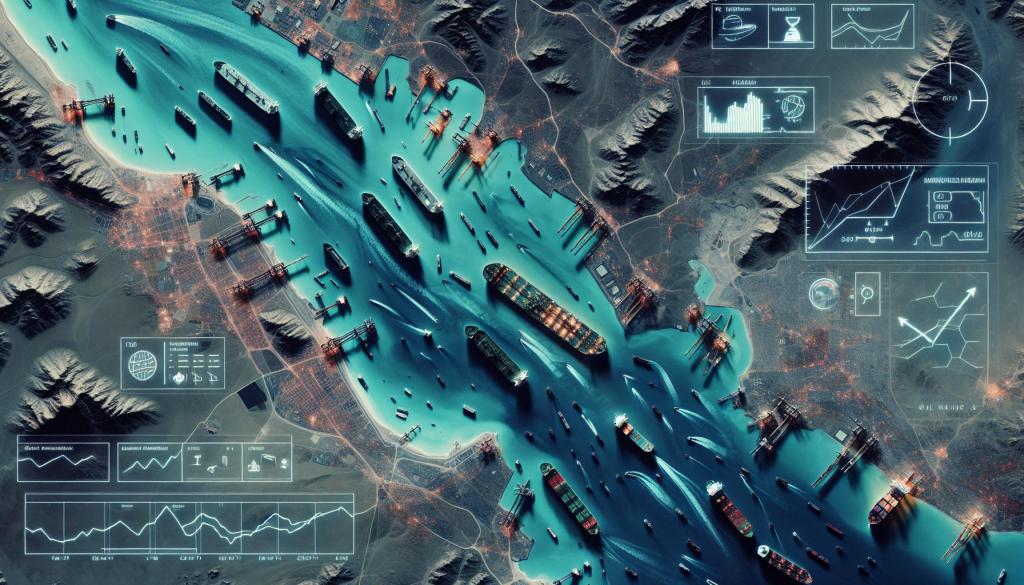
Operator behavior has responded swiftly. AIS data and port reports indicate that, instead of “running the gauntlet,” on the order of 150–250 vessels—including crude and LNG carriers—have chosen to idle, anchor, or turn back rather than attempt passage [1][3]. Major container and liner companies (Maersk, MSC, CMA CGM, Hapag‑Lloyd, COSCO) have suspended or severely curtailed bookings via the strait, while some air cargo operators (e.g., Emirates SkyCargo) have also restricted services [2][3][3]. Advisory services such as JMIC now report that commercial transits have fallen to single‑digit levels, with as few as one confirmed transit in a 24‑hour period—effectively a near‑halt in traffic created not by mines or blockships but by risk‑driven self‑denial [4].
This “insurance‑driven shutdown” is strategically significant. It demonstrates that Iran can generate major global economic effects and a near‑standstill of a crucial chokepoint without openly crossing the bright legal and political line of “closing” Hormuz [3][4]. Such an approach reduces the risk of inviting overwhelming U.S. military retaliation that a visible, conventional blockade would almost certainly trigger, while still exerting pressure on adversaries through energy prices and supply chain disruptions. It also highlights the unexpectedly central role that non‑military actors—underwriters, shipping executives, charterers—now play in shaping escalation dynamics in the Gulf.
The rerouting and redundancy picture underscores the system’s fragility. Bypass pipelines such as Saudi Arabia’s East–West (Petroline) and the UAE’s ADCOP line can together absorb perhaps 2–3 million barrels per day of additional flows, a fraction of the roughly 20 million barrels per day that typically depend on Hormuz [4][5][4]. Iran’s own Goreh–Jask pipeline remains effectively non‑operational [4]. Even when crude can be moved to Red Sea outlets like Yanbu, onward seaborne shipments face their own chokepoints and security risks, notably the Bab al‑Mandeb and the still‑volatile Red Sea/Suez corridor [4]. Attacks on infrastructure linked to Fujairah and other export nodes have further eroded confidence in these alternatives [4]. In effect, the physical redundancy that markets have often assumed exists around Hormuz is proving both quantitatively insufficient and qualitatively vulnerable.
For non‑energy trade, the direct container volumes through Hormuz are relatively modest—less than 4% of global containerized trade—but the ports of Jebel Ali and Khor Fakkan are vital hubs in regional feeder networks serving the Gulf, South Asia, and East Africa [1]. With Hormuz constrained and the Red Sea route still unstable, major carriers are increasingly diverting around the Cape of Good Hope, adding 10–14 days to transit times and about $1 million in additional fuel costs per voyage [3][5][6][3]. These longer, costlier routes disrupt supply chains far beyond oil and gas, affecting autos, electronics, pharmaceuticals, and temperature‑controlled goods that depend on just‑in‑time logistics [2][3]. Production delays, inventory shortages, and increased freight rates have become more likely, even on relatively limited kinetic action.
Energy markets have reacted accordingly. The combined effect of insurance withdrawal, behavioural avoidance, constrained bypass capacity, and explicit Iranian threats has already produced double‑digit percentage increases in Brent crude and European gas prices [2]. Unlike previous Hormuz scares where price spikes were brief and faded once shipping normalized [2], analysts now emphasize that the overlapping stresses—ongoing confrontation among Iran, the U.S., and Israel; tight dependence on Gulf energy; and a highly reactive, risk‑sensitive insurance sector—make this episode more durable and structurally destabilizing [2][4]. A localized maritime incident in or near the strait can now propagate quickly through financial and logistical channels into a broader supply shock and heightened political pressure for military action.
These developments collectively mark a shift in Gulf deterrence and crisis management. Iran’s ability to impose costs through calibrated, deniable, and legally ambiguous measures—drones near but not necessarily in the strait, targeted attacks in adjacent waters, threats amplified by insurance repricing—shows that control over escalation is no longer primarily a contest of naval tonnage or missile inventories. Instead, escalation pathways now run heavily through insurance clauses, war‑risk zones, charterparty terms, and the cautious risk calculus of shipowners and ports. For states seeking to stabilize Hormuz, this implies that security initiatives must extend beyond naval deployments and traditional rules of engagement to include: mechanisms to backstop maritime insurance in crises; clearer international norms or red lines on the use of drones and unmanned boats near critical chokepoints; and crisis‑management arrangements that integrate commercial actors into de‑escalation planning. Without such adaptations, the strait will remain vulnerable not only to overt military confrontation, but also to the more subtle, market‑mediated disruptions that have now proven capable of mimicking a full closure.
Conclusion
The current crisis in the Strait of Hormuz and the wider Gulf has moved the region from chronic vulnerability to an “insurance‑driven” near‑shutdown. Physical threats—missiles, drones, unmanned boats, electronic interference—have widened target sets and strained already limited naval escort capacity, turning routine transit into a high‑stakes calculation. At the same time, the withdrawal of war‑risk cover, surging premiums, and fragile pipeline alternatives have translated perceived danger into an effective embargo, sharply repricing oil, gas, and container flows. Together, these dynamics reveal a new era of Gulf deterrence in which commercial actors and financial risk channels can simulate closure without a declared blockade.
Sources
[1] https://www.cnbc.com/2025/06/22/threat-to-commercial-shipping-around-arabian-peninsula-is-rising-largest-global-shipowners-organization-warns.html
[2] https://www.nbcnews.com/business/economy/iran-us-war-strait-hormuz-shipping-cargo-oil-rcna261410
[3] https://www.cbs8.com/article/news/nation-world/attack-on-iran/iran-conflict-global-ocean-freight-air-cargo-supply-chains-oil/507-5caf3b6b-d69e-49fb-81aa-256427590fb0
[4] https://gcaptain.com/strait-of-hormuz-traffic-grinds-to-near-halt-as-security-threat-remains-critical-advisory-warns/
[5] https://www.newswest9.com/article/news/nation-world/attack-on-iran/iran-conflict-global-ocean-freight-air-cargo-supply-chains-oil/507-5caf3b6b-d69e-49fb-81aa-256427590fb0
[6] https://apnews.com/article/iran-war-supply-chain-disruption-8f262bb210710b7509221a3dccf787c9
[7] http://www.stephensonharwood.com/insights/strait-of-hormuz-update-heightened-war-risks-and-implications-for-shipping/
[8] https://www.aljazeera.com/economy/2026/3/3/maritime-insurers-cancel-war-risk-cover-in-gulf-will-it-spike-energy-cost
[9] https://www.theguardian.com/business/2026/mar/02/maritime-insurers-war-risk-cover-gulf-iran-shipping-strait-of-hormuz
[10] https://www.aa.com.tr/en/energy/general/hormuz-blockade-pushes-regional-gas-exporters-to-seek-alternative-routes/55157
[11] https://www.firstcoastnews.com/article/news/nation-world/strait-hormuz-oil-gas-costs-rise-trade-route-disrupted-conflict-iran-tanker-traffic/507-16b4a068-8800-4893-b3dd-e53c0b031f4a
[12] https://www.aljazeera.com/news/2026/2/22/iran-us-tensions-what-would-blocking-strait-of-hormuz-mean-for-oil-lng/
[13] https://www.cnbc.com/2026/03/02/strait-of-hormuz-crisis-us-iran-israel-war-shipping-trade-oil.html
[14] https://www.npr.org/2026/03/04/nx-s1-5736104/iran-war-oil-trump-israel-strait-hormuz-closed-energy-crisis/
Written by the Spirit of ’76 AI Research Assistant

 Realizing News
Leave a comment