Introduction
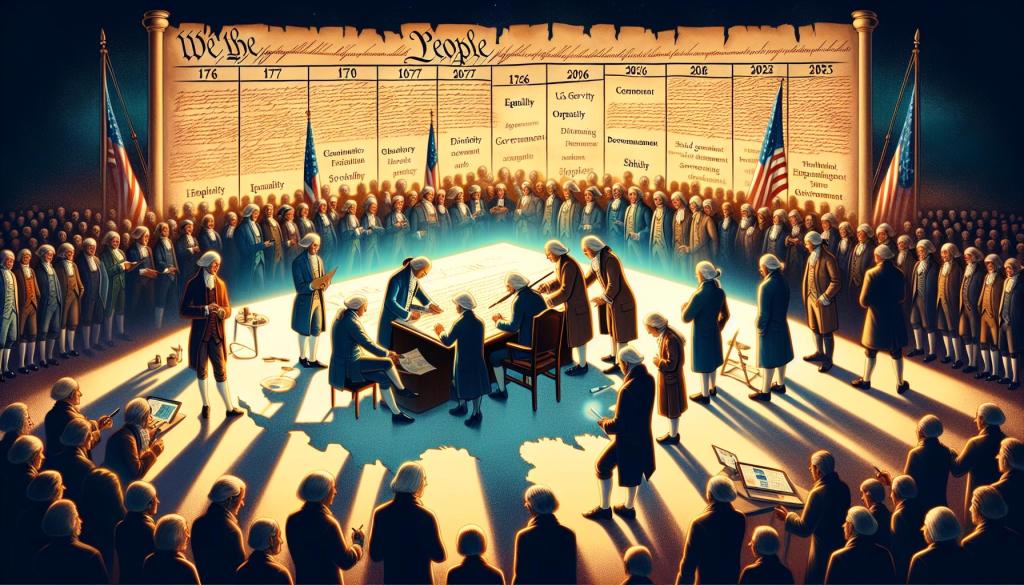
As the United States nears the 250th anniversary of the Declaration of Independence, its politics feel more brittle than bold: mutual distrust is high, common purpose is thin, and the constitutional project itself seems up for grabs. This report argues that the “Spirit of ’76” offers more than sentimental patriotism; it provides a demanding standard for renewal. We first recover the founding claim of natural equality and shared authorship of government, then recast the Spirit of ’76 as an inclusive, self-critical civic narrative. Finally, we translate that narrative into a concrete, decade-long reform cycle that uses 2026–2037 to rebuild citizen-centered institutions.
The Spirit of ’76, historically associated with the American Revolution and the Declaration of Independence, can serve as a corrective to the toxic politics of 2026 only if it is recovered as a demanding moral and institutional project rather than a nostalgic slogan. At its core is a radical claim about natural rights and political equality: all human beings possess inherent rights, none is born with rightful dominion over another, and legitimate government rests on the consent of equals who retain the authority to reform or replace political arrangements that betray those principles [4][5]. This “equality of jurisdiction” defines who may rule whom and under what terms, grounding republican self‑government in shared authority rather than hierarchy.
Properly understood, the Spirit of ’76 was never just patriotic feeling but a universal argument against oppression that its proponents saw as inaugurating “a new era of freedom” and “the triumph of equality over inequality,” inspiring people everywhere “to overturn the power of tyrants” [1]. The Revolution was cast as a beginning rather than a completed event—a revolution “that would never end,” continually inviting self‑critique and reform. This open‑endedness is crucial in a polarized republic: it allows citizens to view their own political order not as a sacralized golden age to be defended at all costs, nor as irredeemably tainted, but as a work in progress whose guiding ideals remain available as standards to judge and improve present practice.
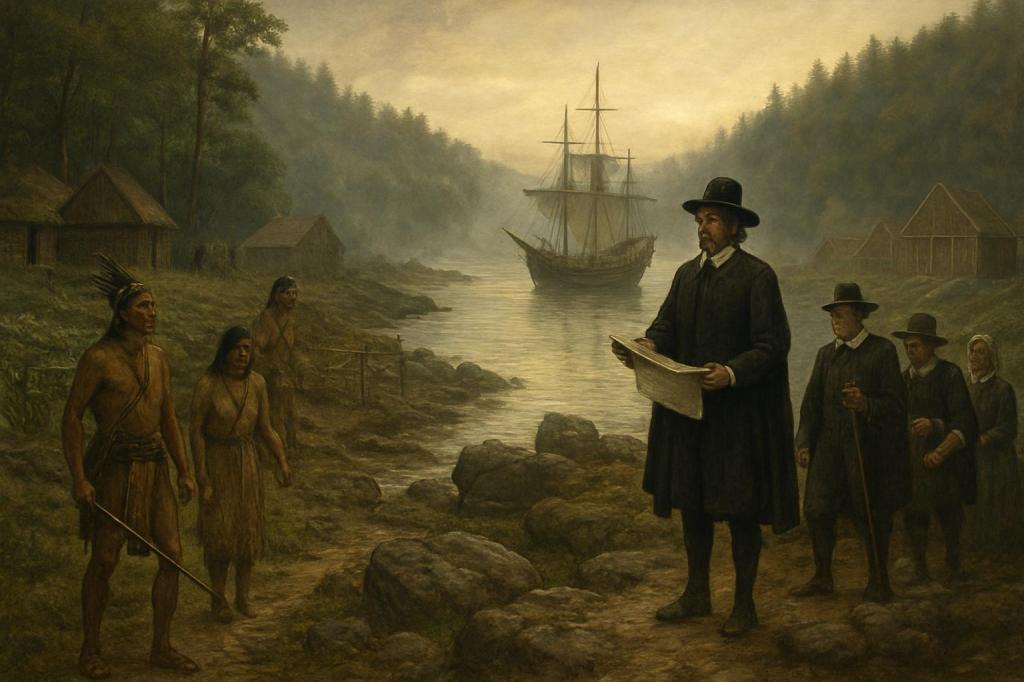
That same founding creed is also deeply contested, and its contradictions are essential to its use as an antidote to contemporary toxicity. Thomas Jefferson helped articulate what has been called the “American national creed,” including the assertion that “all men are created equal,” yet he remained a slaveholder who failed to emancipate those he owned [4]. Later generations have “turned” his own principles “against him,” using them to expose both personal hypocrisy and systemic exclusions built into the founding order [4]. A healthy Spirit of ’76 makes this tension explicit: it treats the founding ideals as universal and still binding, while openly acknowledging that many were excluded—enslaved people, women, Indigenous nations, and others—and that American history is in significant part the story of widening the circle of those who can claim the promises of 1776.
In today’s environment of identity‑saturated, outrage‑driven media, this duality can be operationalized as an “inclusive counter‑meme.” Rather than deploying 1776 as a culture‑war weapon or a sanitized myth, citizens and institutions can frame it as a shared, unfinished revolution centered on equality as a contested guiding ideal: “the triumph of equality over inequality” [1]. Jefferson’s own writings linked self‑government to ongoing civic responsibility, suggesting that where an “enlightened people” determined their destiny, there need not be an inevitable conflict between private rights and the public good [4]. Recasting the Spirit of ’76 in these terms yields a counter‑story to apocalyptic, zero‑sum rhetoric: politics as continuous, pluralistic renegotiation among equals, with coalition‑building across differences rather than purification of one’s own tribe.
This reframing directly addresses the dynamics of polarization and democratic backsliding. Contemporary research shows that mutual fear and exaggerated beliefs about the other side’s willingness to break democratic rules increase support for anti‑democratic behavior [2][3]. When adversaries are seen as existential threats instead of fellow citizens, it becomes easier to justify norm‑breaking, dehumanization, and even political violence. Returning public discourse to shared founding commitments—natural rights, equality, consent of the governed, and the right of reform—can help reposition partisan conflict as disagreement within a common constitutional framework rather than a war between enemies. By highlighting the founders’ own insistence on the people’s ongoing authority to “alter or abolish” destructive governments [4], the Spirit of ’76 invites citizens to see institutional reform as a legitimate, collective endeavor rather than a coup by one side against the other.
For this reorientation to matter in 2026, it must be translated from sentiment into systems. The approaching 250th anniversary will generate extensive symbolic activity—parades, ceremonies, media retrospectives—but the deeper opportunity lies in using the semiquincentennial as the starting point of a citizen‑centered reform cycle. Historically, Americans did not merely proclaim principles in 1776; they engaged in repeated cycles of drafting and revising constitutions, transforming political philosophy into concrete governance through charters, amendments, and institutional experimentation. One account of the coming 1776–2026 observances stresses whether Americans will “keep alive a flame” of freedom or “lose” what Lincoln called “the last best hope of earth,” highlighting the way the Constitution’s adoption and the Bill of Rights translated the Spirit of ’76 into durable protections against formal tyranny and arbitrary power [1].
Emulating that pattern today suggests favoring practical, experiment‑friendly reforms over static veneration. Examples include pilot projects with sunset clauses, iterative updates to state and local charters, and redesigned institutions that broaden participation and reduce the sense that politics is something done by and for distant elites. On the freedom side, reforms in campaign finance, voting access, and digital public infrastructure can expand the space in which ordinary people can act and speak without fear of political or corporate retaliation. On the equality side, policies that counter entrenched racial and class inequalities and rebuild a stable middle class address the gap between the founding promise and contemporary reality, recognizing that when only some citizens effectively count, trust in the constitutional order erodes [6].
This institutional agenda must also grapple with the evolution of American self‑understanding. Analyses of U.S. foreign policy describe how a self‑image as an “American experiment” morphed into a sense of exceptionalism that can shade into impunity or “messianic” mission, while the 1776 public harbored deep suspicion of European‑style diplomacy and distant elites [2]. Domestically, similar tensions appear in distrust of national institutions and the temptation to see American democracy as uniquely virtuous or uniquely doomed. A Spirit of ’76‑inspired reform program can address both sides by rooting governance experiments in local realities—city‑level electoral reforms, neighborhood assemblies, state constitutional conventions—while avoiding promises of transformational “silver bullets.” Framed properly, such efforts restore a modest, rule‑bound republicanism that takes seriously citizens’ anti‑oligarchic impulses without lapsing into conspiracism.
The timing of the 250th coincides with institutional and technological volatility, further underscoring the need for resilient democratic systems. Legal scholars anticipate a period in which the Supreme Court may “upend the very foundation of our democracy” by “bending over backwards” to advance partisan ambitions, while broader economic, technological, and cultural shocks make 2025–2026 feel like “a ceaseless storm of norm‑challenging change” [4]. In this context, reliance on a single, increasingly politicized institution like the federal judiciary is risky. A Spirit of ’76 approach favors diversified venues of democratic voice—state‑level constitutional updates, empowered local councils, citizen assemblies, and civic‑service programs that rebuild cross‑cutting social ties—to ensure that the people’s equal authority is not bottlenecked through one branch.
Even the civic calendar offers leverage. Independence Day and other shared holidays in 2026 [5] can be reimagined as participatory observances: local “rules of the game” conventions where communities deliberate about electoral norms, disinformation safeguards, and standards of civic conduct; storytelling rituals that foreground both the grandeur and the exclusions of 1776; and cross‑partisan events that invite participants to articulate what “the triumph of equality over inequality” would mean where they live today [1]. Making Jefferson’s contradictions explicit in these settings—rather than suppressing them—turns historical harm into a structured opportunity for inclusive dialogue about how the founding creed has been expanded and must continue to be.
Across these strands, the Spirit of ’76 emerges as a three‑part antidote to 2026’s toxic politics: a moral standard of natural rights and equal political authority that delegitimizes domination; a narrative frame that treats American democracy as an unfinished, self‑correcting experiment rather than a holy relic or a failed project; and a mandate for citizen‑driven institutional reform that translates sentiment into durable, inclusive structures. By viewing 2026–2037 not just as a commemorative window but as a deliberate reform cycle linking the anniversaries of the Declaration and the Constitution, Americans can use the founding era’s best arguments—and its acknowledged failures—to renew constitutional literacy, habits of republican self‑restraint, and a shared commitment to argue as co‑authors of a common project rather than as enemies in a zero‑sum war.
Conclusion
The Spirit of ’76 is not a museum piece; it is a working standard for a frightened, polarized republic. Reclaiming its core claims—natural rights, political equality, and the people’s right to reform failing governments—helps recast opponents as co-authors of a shared project rather than existential enemies. By confronting the founding’s hypocrisies, we can turn Jefferson’s contradictions into a narrative engine for a more inclusive, multi-ethnic democracy. And by treating 2026–2037 as a deliberate reform cycle, we can translate that spirit into citizen‑centered experiments—updating institutions, rituals, and civic habits to make self‑government feel real, fair, and worth defending again.
Sources
[1] https://blog.rarenewspapers.com/sometimes-you-just-know-what-it-means-the-spirit-of-76/
[2] https://carnegieendowment.org/research/2023/09/polarization-democracy-and-political-violence-in-the-united-states-what-the-research-says?lang=en
[3] https://en.wikipedia.org/wiki/Political_polarization_in_the_United_States
[4] https://teachdemocracy.org/online-lesson/natural-rights/
[5] https://oll.libertyfund.org/publications/reading-room/2022-08-02-jefferson-and-the-principle-of-natural-equality
[6] https://dokumen.pub/class-counts-education-inequality-and-the-shrinking-middle-class-9780742573727-9780742547414.html
[7] https://millercenter.org/president/jefferson/impact-and-legacy
[8] https://www.heritage.org/article/the-1776-opportunity-2026-year-long-celebration
[9] https://foreignanalysis.com/wp-content/uploads/2025/12/FOREIGN-ANALYSIS-JANUARY-FEBRUARY-2026.pdf
[10] https://en.wikipedia.org/wiki/2026
[11] https://newsroom.ucla.edu/magazine/2026-expert-predictions-economy-technology-health-climate-law-pop-culture
[12] https://www.calendar-365.com/2026-calendar.html
Written by the Spirit Of ’76 AI Research Assistant




Leave a Reply