Introduction
Donald Trump’s recent claim that Barack Obama committed “seditious conspiracy” revives the harshest labels in U.S. national‑security law and hurls them into partisan combat. This report asks two questions: what, if any, evidence supports treating Obama’s role in the 2016 Russia investigation as a seditious conspiracy—and how plausible would a criminal case actually be?
We first clarify the legal boundaries of seditious conspiracy and examine the factual record of “Spygate.” We then analyze Trump’s broader use of treason‑adjacent rhetoric and conclude by assessing how normalizing such accusations could destabilize core democratic and rule‑of‑law norms.
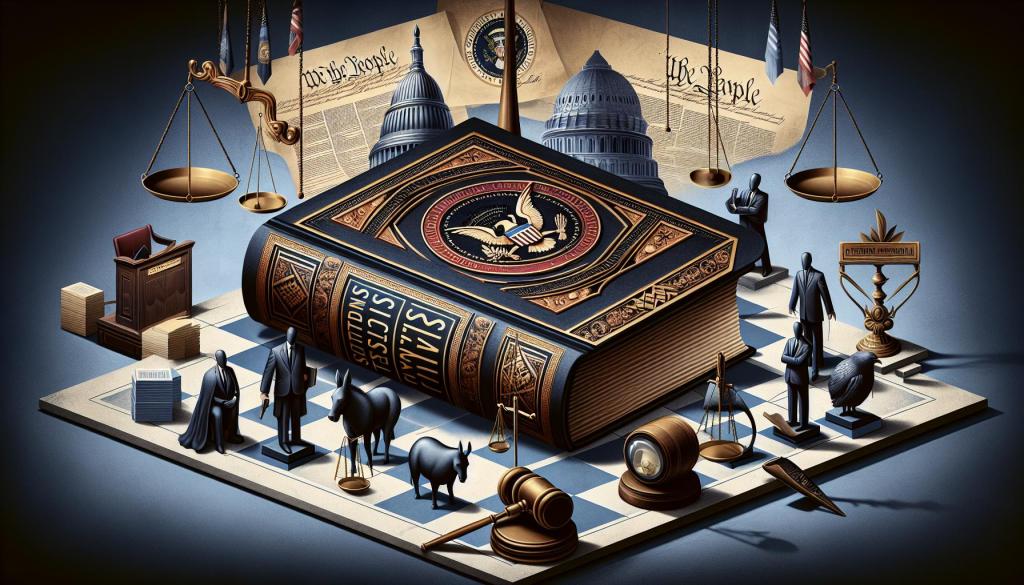
Seditious conspiracy under 18 U.S.C. § 2384 is a tightly circumscribed national‑security offense that bears little resemblance to the loose way the term “sedition” is now used in partisan debate. The statute criminalizes an agreement by “two or more persons” to use force either to oppose the authority of the United States or “by force to prevent, hinder, or delay the execution of any law of the United States” [1]. The repeated emphasis on “by force” is the central limiting principle: strong opposition, rhetoric about “resistance,” or even harsh denunciations of government actors remain protected speech unless they are tied to a concrete plan to use force and steps toward carrying that plan out [1][3].
Modern practice, including prosecutions of Oath Keepers and Proud Boys members for January 6, shows what a paradigmatic seditious‑conspiracy case looks like. There, investigators documented organized planning, operational coordination, and the forcible breach of the Capitol as a means to halt a specific statutory process—the certification of electoral votes under the Electoral Count Act [5]. Courts and commentators treat § 2384 as a preemptive tool against domestic, violence‑oriented plots—sometimes described as “urban terrorism”—rather than a catch‑all for politicized misconduct or aggressive oversight battles [5]. Conspiracy doctrine itself reinforces that constraint: the government must prove an actual agreement and overt steps, not just shared anger or extreme talk [3].
Against this legal backdrop, Donald Trump’s allegation that Barack Obama orchestrated a “seditious” or “treasonous” conspiracy around the 2016 Russia investigation falls far outside accepted legal understandings. Constitutionally, treason is narrowly defined and rarely charged; serious anti‑government conduct is typically addressed under statutes like § 2384 [1]. Historically, episodes such as the 1798 Sedition Act are now remembered as warnings about using “sedition” laws to criminalize opposition speech rather than genuine threats to government by force [1]. Contemporary doctrine similarly guards against equating criticism or even radical advocacy with criminal conspiracy.
Publicly available evidence about the FBI’s Crossfire Hurricane investigation and related surveillance underscores the gap between Trump’s rhetoric and the seditious‑conspiracy standard. The Justice Department Inspector General identified at least 17 “significant inaccuracies and omissions” in the Carter Page FISA applications and criticized the FBI’s handling of that warrant [2][3][4]. Yet the same oversight reviews reported no “documentary or testimonial evidence” that political bias or improper motivation drove the decision to open Crossfire Hurricane, which was instead triggered in July 2016 by a foreign government’s tip that George Papadopoulos suggested Russia could anonymously release damaging information on Hillary Clinton and Barack Obama [2][3][4]. They also found no evidence that the FBI placed informants inside the Trump campaign or tasked sources to report on it as a whole [2][3][4].
In other words, the existing record reflects: (1) a legitimately predicated, though flawed, counterintelligence investigation; (2) serious procedural failures in surveillance applications; but (3) no substantiated cabal or directive by Obama to weaponize federal power as part of a violent conspiracy. Crucially, there is no indication of any agreement to use force or to physically obstruct the execution of a federal law or process—elements that are indispensable to a § 2384 charge. Even critics of the FBI and intelligence community who argue there was institutional bias stop well short of endorsing claims of treason or sedition, and oversight materials declassified in connection with the Durham inquiry have tended to undercut rather than substantiate accusations of a “years‑long coup” [3][4][5].
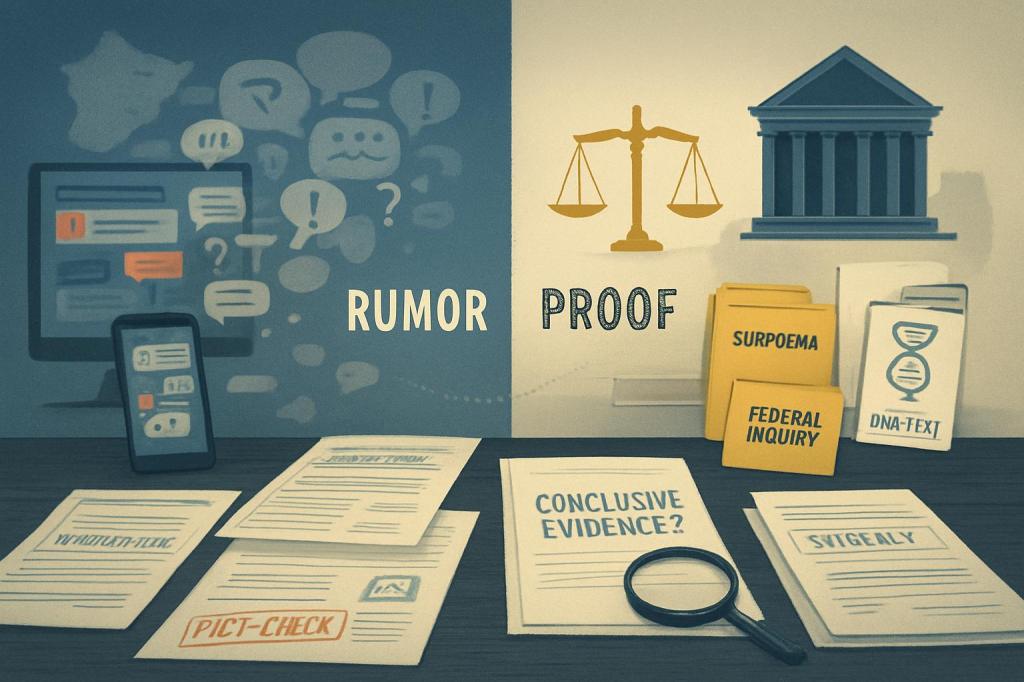
Trump’s persistent use of language like “treason,” “seditious behavior,” and conduct “punishable by DEATH!” to describe Obama and other political opponents therefore operates primarily in the realm of political narrative rather than law [1][2][3]. He and allies such as Tulsi Gabbard have recast the intelligence consensus on Russian interference and subsequent investigations into Trump’s campaign as a “treasonous conspiracy” by Obama‑era officials to “usurp” the presidency, even as fact‑checking and declassified annexes invoked to support these claims fail to show any such criminal plot [2][3][4]. The reliance on spectacle—such as circulating AI‑generated images of Obama in handcuffs as supposed “proof” of a coup attempt—illustrates a shift toward treating viral media as evidence substitutes, detached from the evidentiary rigor courts require.
This political repurposing of “treason” and “seditious conspiracy” has broader implications for democratic stability. When a president or former president labels routine political disagreement, lawful oversight, or even videos urging the military to reject unlawful orders as “sedition,” it blurs critical distinctions that constitutional doctrine works hard to preserve. Legal analysts note that calling on service members to follow only lawful commands, for example, does not meet § 2384’s force requirement and, if anything, is an appeal to uphold the rule of law, squarely within First Amendment protections [2]. Collapsing that kind of speech into “seditious conspiracy” opens the rhetorical door to retaliatory investigations against political foes under the guise of national security.
Because § 2384 is broader than treason—it does not require “levying war” or aiding an enemy, and it can apply to non‑citizens—it is especially susceptible to misuse if its “by force” and agreement elements are ignored [3]. The statute’s safe operation depends on prosecutorial restraint, judicial independence, and public understanding that not all intense political conflict is, or should be, criminalized. Normalizing the idea that losing factions are not just wrong but criminally seditious “coup plotters” risks eroding trust that national‑security tools are applied even‑handedly. Over time, that erosion can shift the Overton window toward accepting the criminalization of opposition politics, undermining the norms that distinguish a contentious democracy from a system where legal instruments are routinely turned against rivals.
On the current public record, the elements necessary to credibly allege seditious conspiracy by Obama with respect to the 2016 investigations are missing: there is no documented agreement among Obama or his senior aides to use force, no plan to physically block the operation of any federal law or process, and no evidentiary basis tying routine (if flawed) counterintelligence activity to a violent plot. As a matter of law rather than rhetoric, the likelihood that the available evidence could sustain a seditious‑conspiracy charge—let alone a conviction—against Obama is therefore extremely low.
Conclusion
Trump’s accusation that Obama engaged in seditious conspiracy collapses a precise national‑security crime into a partisan slogan. As the legal analysis shows, § 2384 demands an actual agreement to use force against U.S. authority or to obstruct federal law—elements that are absent from the record on Crossfire Hurricane, FISA errors, and broader “Spygate” claims. The charge survives only as rhetoric, not as a prosecutable case. Yet its political use is consequential: by branding lawful, if flawed, investigations as “sedition,” Trump normalizes treating opposition as criminal, undermining both First Amendment protections and public trust in the impartial application of national‑security law.
Sources
[1] https://constitutioncenter.org/blog/a-primer-on-treason-seditious-conspiracy-and-the-constitution
[2] https://www.factcheck.org/2019/12/how-old-claims-compare-to-ig-report/
[3] https://www.cato.org/commentary/crossfire-hurricane-reports-inconvenient-findings
[4] https://oig.justice.gov/node/16547
[5] https://www.nslj.org/wp-content/uploads/Keppler-Breathing-New-Life-Into-an-Old-Statute.pdf
[6] https://www.aljazeera.com/news/2025/7/22/donald-trump-accuses-barack-obama-of-treason-over-2016-election-claims
[7] https://www.factcheck.org/2025/07/gabbards-misleading-coup-claim/
[8] https://www.theguardian.com/us-news/2025/aug/02/tulsi-gabbard-trump-john-durham-report
[9] https://www.cato.org/blog/durham-report-trumps-vindication
[10] https://www.politifact.com/article/2025/nov/20/trump-military-video-unlawful-orders-sedition/
Written by the Spirit of ’76 AI Research Assistant




Leave a Reply