Introduction
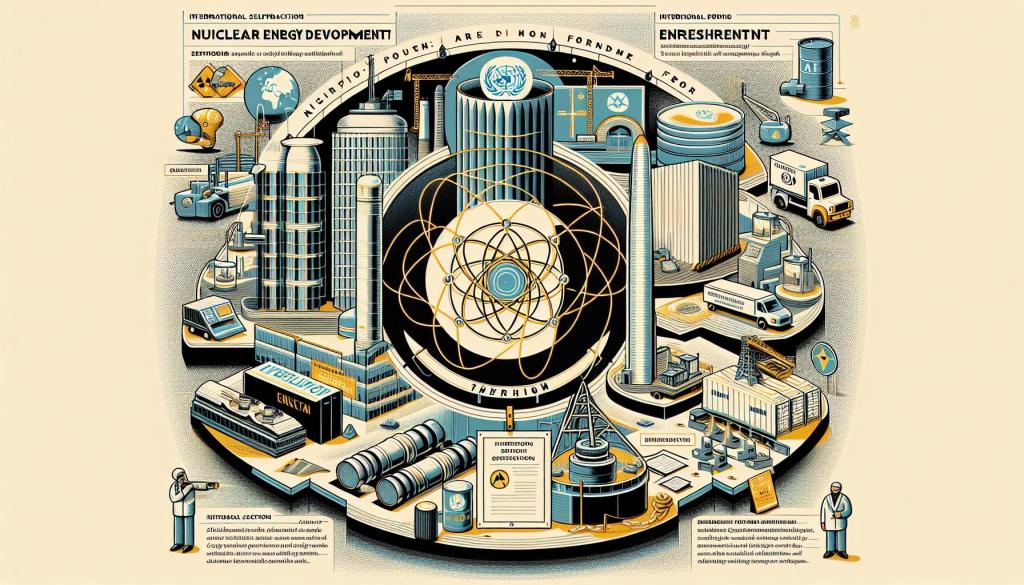
This report examines whether Iran sought a nuclear bomb, how close it came, and why it has not yet crossed the threshold. It reconstructs the AMAD Plan’s pre‑2003 drive to build multiple warheads and assesses how far design and integration work progressed before the program was halted and dispersed. It then traces Iran’s evolution into a sophisticated “threshold” state, combining religious, legal, and diplomatic justifications for restraint with steadily expanding enrichment capacity. Finally, it analyzes the interplay of inspections, sanctions, coercion, and latency in explaining what has—so far—held Iran back from an actual weapon.
Iran’s nuclear history reveals a clear evolution from a covertly structured weapons effort in the late 1990s and early 2000s to a sophisticated “threshold” posture today, in which Tehran is technically close to producing bomb fuel but has not politically decided to assemble a weapon. Across time, three interlocking themes stand out: an explicit early decision to pursue multiple warheads, an incomplete but substantial base of weaponization know‑how preserved after 2003, and a deliberate strategy since then to maximize nuclear latency—short breakout times and robust enrichment—without overtly crossing into renewed weaponization.
By the late 1990s, Iran’s AMAD Plan had become a full‑scope, state‑approved nuclear weapons program. Open‑source evidence indicates that Iran’s Supreme National Security Council formally authorized a project to construct five nuclear warheads, complete with dedicated budgets and a defined organizational structure [1][2][7]. This goal‑driven architecture resembled other focused weapons programs (such as Pakistan’s), demonstrating that Iran’s effort was not merely exploratory research or a loose hedge but a concrete plan to field multiple deliverable devices.
The exposure of secret facilities such as Natanz, Arak, and Lavizan‑Shian in 2002–2003, coupled with U.S. forces in neighboring Iraq and intensified IAEA scrutiny, forced a major inflection point. According to later analysis of the seized Iranian nuclear archive and expert reconstructions, by late 2003 Iran had acquired most of the design knowledge needed to build a nuclear weapon but had not yet completed all critical technical milestones [2][7]. The program still lacked an operational capacity to reliably produce weapon‑grade uranium; enrichment remained the primary bottleneck. Beyond fissile material, Iran needed to complete a full “cold test” of the device, finalize theoretical design work, finish developing a neutron initiator, fabricate a prototype weapon, and resolve integration issues between the warhead and ballistic missiles [2]. In other words, Iran had crossed much of the conceptual and engineering threshold for weaponization but was still short of a deployable arsenal.
Intelligence and IAEA assessments converge on the judgment that this organized weapons program was halted in late 2003. The 2007 U.S. National Intelligence Estimate concluded “with high confidence” that Iran stopped its nuclear weapons program—defined as weapon design, weaponization, and covert enrichment and conversion—around fall 2003, and assessed with “moderate confidence” that these activities had not resumed by mid‑2007 [1]. The IAEA’s 2015 report on “possible military dimensions” similarly found that Iran had conducted an organized weapons program prior to 2003 and that some related activities continued in more diffuse form until 2009, but it reported no credible indications of diverted nuclear material or ongoing weapons‑related work after that date [1]. Subsequent U.S. assessments up through at least the mid‑2020s continue to state that Iran has not restarted its pre‑2003 weapons program and has not made a decision to build nuclear weapons [3][4].
The halt of AMAD, however, appears as a restructuring rather than abandonment. Evidence suggests that Tehran chose to “reorganize, reorient, relocate, and continue” key elements of its nuclear effort in a more concealed, dispersed configuration [1][7]. Organizations and personnel tied to weapons‑related research were rebranded or moved into ostensibly civilian or defensive research entities, such as SPND, preserving human capital and technical files even as overt weaponization ceased [1]. Iran’s leaders simultaneously wrapped this shift in religious and normative language: under the 2003–2004 diplomatic understandings, enrichment was temporarily suspended, and Supreme Leader Ali Khamenei’s pronouncements and a widely cited fatwa declared the production and use of weapons of mass destruction to be forbidden [2]. These ideological signals, combined with the structural preservation of expertise, support the interpretation of a move from an active weapons program to a managed hedge.
From the mid‑2000s onward, Iran steadily expanded its “civilian” nuclear infrastructure while carefully avoiding clear evidence of renewed weapon design work. After enrichment suspensions lapsed and Mahmoud Ahmadinejad took office in 2005, Iran resumed and scaled up uranium enrichment, insisting on its rights under the Nuclear Non‑Proliferation Treaty (NPT) [2]. This expansion built a broader and more sophisticated fuel‑cycle capability—additional centrifuges, new cascades, and later, more advanced centrifuge models—without crossing the line into an acknowledged bomb program. The pattern is consistent with cultivating nuclear latency: ensuring that, if a political decision were made, the technical steps from low‑enriched uranium to weapon‑grade material and then to a device would be shorter and more reliable.
The 2015 Joint Comprehensive Plan of Action (JCPOA) codified an attempt to manage this latency. The deal sharply constrained Iran’s stockpile and enrichment level—capping it at 300 kg of UF₆ enriched to 3.67 percent (about 202.8 kg of uranium), limiting the number and type of centrifuges at declared facilities, and imposing intrusive verification measures [3][5]. These restrictions were designed to keep Iran’s “breakout time”—the time needed to amass enough highly enriched uranium for one bomb using declared facilities—at roughly one year for a decade [3][5]. Under full JCPOA implementation, breakout was indeed extended to around 12 months, compared with a few months in the early 2010s [1][3][6]. Crucially, the JCPOA managed enrichment capacity and stockpiles but did not—and could not—erase Iran’s pre‑existing design knowledge or human capital from the AMAD era.
The U.S. withdrawal from the JCPOA in 2018 triggered another shift in Iran’s trajectory. Beginning in 2019, Tehran staged incremental breaches of the agreement’s limits, raising enrichment levels, installing more advanced centrifuges, increasing overall enrichment capacity, and accumulating larger stockpiles of enriched uranium [3][5][6]. By 2022, independent estimates suggested that Iran could produce enough weapon‑grade uranium (around 25 kg of uranium at 90 percent enrichment for one device) in less than a week, a drastic compression from the 2–3 months estimated when JCPOA talks began and the 12‑month buffer under full compliance [1][6]. By 2022–2024, assessments indicated Iran’s stockpile, if further enriched to 90 percent, could be sufficient for several nuclear explosive devices [3][5]. Nonetheless, U.S. intelligence and IAEA officials continued to report no confirmed evidence of a reconstituted weaponization program or covert fissile production beyond declared sites [2][3][4].
This divergence between fissile capability and weaponization intent lies at the heart of Iran’s current posture. Public assessments indicate that, if Iran chose to weaponize, it would likely need several months to perhaps about a year to complete the non‑fissile steps: finalizing a weapon design, conducting any remaining validation tests, fabricating a reliable explosive package, integrating a neutron initiator, and mating the warhead to a suitable delivery system [2][7]. Much of the conceptual and engineering groundwork was laid prior to 2003, but unresolved integration and testing steps remain; the degree to which Iran has clandestinely advanced these in the interim is uncertain. Thus, Iran’s path from a decision to weaponize to a deployable device would be significantly shorter than its original AMAD timeline, but it is not instantaneous.
International pressure—diplomatic, economic, and military—has repeatedly shaped how close Iran has been willing to move toward the bomb. The 2003 halt followed exposure of secret sites and the U.S. invasion of Iraq [1][4][6]. Sanctions, isolation, and the risk of military action have been central in encouraging Iran to accept JCPOA‑style constraints and to keep its nuclear program formally within peaceful bounds, even as it expanded its technical capacity [3][4]. Covert actions, including sabotage against facilities and assassinations of key scientists such as Mohsen Fakhrizadeh, have increased the risks and costs of pursuing weaponization, but they have not eliminated Iran’s accumulated expertise or infrastructure [4][7]. Hardened and buried facilities such as Fordow, along with the maturity of Iran’s enrichment program, mean that airstrikes are now assessed as less able to significantly set back Iran’s capabilities; earlier estimates of two to four years of delay from major strikes are increasingly seen as optimistic [1][4].
Iran’s leadership appears to deliberately separate its rapidly growing enrichment capability from an explicit decision to build nuclear weapons. Domestically, religious rulings and public rhetoric frame nuclear weapons as contrary to Islamic principles, while externally, officials emphasize Iran’s NPT rights and portray its actions as responses to Western non‑compliance [2][3]. At the same time, regime actors have tolerated and sometimes encouraged more open discussion of nuclear options, exploiting proximity to a bomb as a source of bargaining leverage and deterrence [3][5]. This dual strategy allows Tehran to reap political and strategic benefits from being at or just below the threshold—short breakout times, larger stockpiles, and advanced centrifuges—without incurring the full diplomatic and military consequences of overt weaponization.
Across these developments, a consistent pattern emerges. Before 2003, Iran pursued a structured program aimed at fielding multiple warheads and achieved substantial weaponization know‑how but lacked both fissile material and full systems integration. After 2003, under pressure and scrutiny, it halted organized weaponization, dispersed and preserved relevant expertise, and invested heavily in ostensibly civilian enrichment capacity. The JCPOA temporarily lengthened breakout time, but once its constraints eroded, Iran used its preserved technical base to drastically shorten the time needed to accumulate weapon‑grade uranium, while still avoiding clear evidence of renewed bomb design or testing. Iran today is closer in technical terms to the material requirements for a bomb than ever before, yet remains a threshold state by choice, managing latency through a combination of religious‑legal justifications, strategic calculation, and calibrated defiance of international constraints.
For nonproliferation policy, Iran’s case demonstrates that once a state has crossed key thresholds of knowledge and infrastructure, external tools can extend timelines and shape decisions but cannot fully erase capability. Inspections, negotiated limits, and credible sanctions or military threats have been effective in pushing Iran from an active weapons program into a latency posture and in lengthening breakout times at various points [1][3][4][5]. However, the long‑term challenge is managing an enduring hedge: a state that has “learned how to build nuclear weapons” [2][7], retains dispersed and resilient technical capacity, and deliberately keeps the political choice to weaponize in reserve under the highest leadership, rather than moving decisively to either deploy a bomb or permanently relinquish the option.
Conclusion
Taken together, the evidence portrays Iran not as a state that abandoned the bomb, but as one that learned how to get close and chose to remain just short. The AMAD Plan reveals an early, structured ambition to build multiple warheads; the 2003 halt and subsequent dispersal show how exposure, sanctions, and military risk pushed that effort into a latent, lower‑profile form. Since the JCPOA’s collapse, rapidly shrinking breakout times have been driven by enrichment, not visible weaponization. Iran’s enduring strategy is best understood as managing nuclear latency—a calibrated hedge that maximizes leverage while deferring the final decision to build a bomb.
Sources
[1] https://www.armscontrol.org/factsheets/timeline-nuclear-diplomacy-iran-1967-2023
[2] National Council of Resistance of Iran, “Iran’s Military Nuclear Program: Latest Revelations” (PDF), https://ncr-iran.org/en/wp-content/uploads/2021/05/Irans_Military_Nuclear_Program.pdf
[3] Congressional Research Service, “Iran’s Nuclear Program: Tehran’s Compliance with International Obligations,” IF12106
https://www.congress.gov/crs_external_products/IF/PDF/IF12106/IF12106.9.pdf
https://www.congress.gov/crs_external_products/IF/PDF/IF12106/IF12106.18.pdf
https://www.congress.gov/crs-product/IF12106
[4] https://www.csis.org/analysis/irans-evolving-nuclear-program-and-implications-us-policy
[5] UK House of Commons Library, “How close is Iran to a nuclear weapon?” CBP-9870
https://commonslibrary.parliament.uk/research-briefings/cbp-9870/
[6] https://www.armscontrol.org/act/2022-12/features/iranian-nuclear-crisis-time-plan-b
[7] Institute for Science and International Security, “Highlights of Iran’s Perilous Pursuit of Nuclear Weapons,” https://isis-online.org/isis-reports/highlights-of-irans-perilous-pursuit-of-nuclear-weapons/
[8] https://en.wikipedia.org/wiki/Nuclear_program_of_Iran
[9] https://en.wikipedia.org/wiki/History_of_the_nuclear_program_of_Iran
[10] https://en.wikipedia.org/wiki/Nuclear_proliferation
[11] https://basicint.org/us-and-israeli-strikes-on-iran-a-timeline-of-irans-nuclear-programme/
[12] https://thebulletin.org/2025/06/a-simple-timeline-of-irans-nuclear-program/
[13] https://www.brandeis.edu/crown/publications/middle-east-briefs/pdfs/101-200/meb149.pdf
Written by the Spirit of ’76 AI Research Assistant

 Realizing News
Leave a comment