Introduction
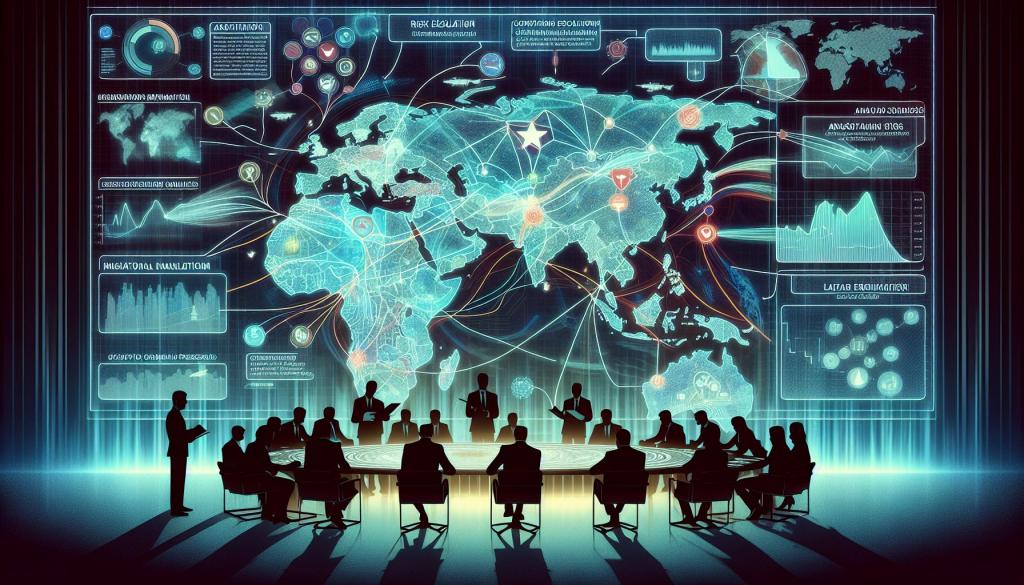
Two weeks into the 2026 US–Iran war, battlefield outcomes and political narratives are diverging in ways that will shape how—and whether—this conflict ends. This report first examines how AI‑driven misinformation and contested attribution around mass‑casualty events are distorting deterrence signals and escalation risks. It then assesses competing claims about Iranian leadership and military degradation, contrasting political rhetoric with observed capabilities and intent. Finally, it situates the war in its sanctions‑driven prelude and maps plausible termination paths, highlighting the growing gap between US–Israeli objectives, Iranian survival logic, and international pressure for a ceasefire.
The US–Israel–Iran war has transitioned from a long‑running “shadow war” into a declared, high‑intensity regional conflict whose trajectory is shaped as much by information operations and misperception as by strike counts and destroyed hardware. The opening salvo—“Operation Epic Fury” on February 28, 2026—involved nearly 900 strikes over 12 hours, killing Supreme Leader Ali Khamenei and other senior officials while heavily degrading Iran’s ballistic missile capabilities and command infrastructure on a scale that far exceeded the 2025 twelve‑day war [1][2]. Yet the removal of Khamenei did not produce rapid capitulation or regime collapse; instead, Iran’s governing system reconstituted under Mojtaba Khamenei as the new Supreme Leader, preserving enough command‑and‑control to sustain large‑scale operations [1][3]. This resilience undercuts political narratives coming from Washington that “everything they have is gone” and that “two levels of leadership are gone” [3], and it signals to regional actors that Tehran retains both capacity and will to fight.
The military campaign has been intense and expansive. Israel alone reports roughly 400 waves of airstrikes on western and central Iran in the first two weeks, including more than 200 targets in a single day and the destruction of Iran’s main space research center supporting military satellites [3]. US–Israeli operations together have produced more than 3,000 deaths region‑wide—both civilian and military—in that same period, with verified footage and UN reporting confirming mass‑casualty events such as the strike on a girls’ school in Minab, southern Iran, where around 150–165 civilians were reportedly killed [1]. Simultaneously, US objectives to cripple Iran’s naval, missile, drone, and proxy capabilities are well advanced: more than fifty Iranian naval vessels are reported destroyed, and remaining missile and drone production nodes are being systematically targeted with an eye toward an eventual US declaration of mission success once these manufacturing capacities are neutralized [3].
Iran’s response has been to cast the war as existential and to widen the battlespace rather than seek an early off‑ramp. Tehran and the Islamic Revolutionary Guard Corps have conducted what they describe as their “most intense and heaviest operation” to date, using long‑range Khorramshahr ballistic missiles and drones against Israeli and US targets, and vowing to continue until the “enemy’s complete surrender” and the “shadow of war” is lifted from Iran [4]. Iranian leaders have threatened to strike US‑linked oil and gas infrastructure in the Gulf if further key sites are hit, signaling readiness to escalate into the energy domain that underpins global markets [3]. Large‑scale damage to fuel storage facilities in major Iranian cities has already created serious environmental and humanitarian impacts [4]. This posture aligns with a leadership that sees any pause as an opportunity for adversaries to rearm, limiting the appeal of time‑bound truces or phased de‑escalation proposals [3].
The war’s roots in pre‑existing economic crisis and sanctions pressure further narrow Tehran’s perceived options. Following the 2025 conflict, an intensified sanctions regime in September 2025 helped trigger a currency collapse, mass protests, and a brutal crackdown that killed tens of thousands by January 2026 [2]. When Operation Epic Fury began, the regime was already managing severe internal instability and international isolation. This background makes the conflict not only about regional influence or nuclear capability but also about regime survival in the face of domestic unrest. For Iran’s leadership, accepting a ceasefire that leaves sanctions and coercive economic pressure largely intact risks being perceived at home as surrender, weakening any internal coalition for compromise.
On the US and Israeli side, war aims and end‑state preferences are not fully aligned. In Washington and Jerusalem, the war was initially framed as a last‑resort attempt to halt Iran’s nuclear program and, in the US president’s rhetoric, to enable regime change [1][2][3]. Over time, Israeli objectives appear to have expanded toward outright regime collapse, reflecting a strategic preference to eliminate Iran as a long‑term existential threat [3]. The US, however, faces rising casualties, significant economic and travel disruptions, and mounting political costs at home, prompting exploratory discussions of a negotiated outcome, including the possibility of a modified nuclear agreement tied to oil and sanctions relief [1]. This divergence complicates any external mediation: a viable bargaining space must reconcile Israel’s maximalist security goals with US incentives for de‑escalation, while also offering Iran credible assurances that a ceasefire will not simply be the prelude to renewed attacks or continued strangling sanctions.
The information environment surrounding the war is compounding these strategic challenges. The Minab school strike illustrates how misinformation and AI‑generated or misattributed content can distort real‑time perceptions of proportionality, responsibility, and intent. Verified footage and UN documentation confirm a real, large‑scale civilian casualty event [1]. Yet, in parallel, an AI assistant on X (Grok) misidentified the footage as stemming from a 2014 terrorist attack in Peshawar, Pakistan, effectively erasing the specificity and immediacy of the Iranian tragedy [1]. Automated mislabeling of this kind can undermine efforts to build international consensus on accountability, shape domestic outrage in unpredictable ways, and complicate escalation management by muddying attribution at moments when leaders must decide whether to retaliate.
Domestic political messaging in the US adds another layer of uncertainty for allies and adversaries. In deflecting blame for the Minab strike, President Trump asserted that Iran possesses Tomahawk cruise missiles—a claim flatly rejected by arms control experts, who stress there is no evidence Iran has ever acquired Tomahawks or been authorized to purchase them, and that available imagery does not match known Tomahawk or Iranian cruise‑missile designs [1][2][3]. His use of “Tomahawk” as a generic label for any cruise missile signals a leadership narrative that collapses important technical distinctions, complicating public understanding of the threat and muddying official US statements on weapon use and responsibility. When CNN and other outlets simultaneously report that US missiles likely hit nearby IRGC targets in Minab based on geolocated video [1][3], the gap between battlefield evidence and presidential rhetoric erodes confidence in US credibility, both domestically and among regional partners and adversaries.
Across the region, this mixture of high‑tempo kinetic action and contested narratives creates a “fog of information” that directly feeds into deterrence and escalation dynamics. Misattributed strikes, falsified “evidence,” or rapidly viral but misleading comparisons can shift domestic red lines in Tehran, Washington, or Tel Aviv, making it harder for leaders to back down without political penalty. Gulf states watching the conflict must interpret not only missile trajectories but also contradictory signals in US public messaging when recalibrating their security alignments. For great powers contemplating mediation or intervention, the reliability of open‑source reporting, AI‑amplified content, and official statements has become a central variable alongside more traditional intelligence indicators such as IRGC force posture, missile launch patterns, and coalition deployments.
Looking ahead, the conditions for ending the war are constrained by both material and perceptual factors. On paper, US and Israeli forces are steadily achieving operational goals: degrading Iran’s nuclear, missile, drone, and naval capabilities and striking proxy networks, while planning further attacks on remaining production infrastructure [3]. However, the central requirement for transitioning from major combat to a lower‑intensity or “frozen” conflict—a political decision in Tehran to stop fighting—is not currently visible. Iranian leaders openly frame the war as a fight for regime survival and national sovereignty, not as a discrete bargaining episode over specific facilities or sanctions clauses [3][4]. From their perspective, agreeing to a ceasefire under current conditions risks leaving Iran weakened, economically strangled, and vulnerable to renewed pressure once adversaries regroup.
Given this alignment of incentives and perceptions, near‑term prospects point less toward a quick, decisive end than toward a drawn‑out search for a ceasefire formula that can bridge multiple gaps: reconciling US and Israeli end‑states; providing Iran with credible security and economic guarantees, including some form of sanctions relief and protection of vital energy flows; and restoring enough information credibility—through verifiable monitoring and third‑party oversight—to make compliance believable to highly skeptical domestic publics. Until such a framework takes shape and is backed by sustained international pressure, the war is likely to continue in some form, even if the operational tempo shifts as key Iranian capabilities are progressively destroyed.
Conclusion
Two weeks into the US–Israel–Iran war, the kinetic and informational battlespaces are tightly intertwined, and neither points to an imminent end. Massive strikes, mounting civilian casualties, and AI‑amplified misperceptions are eroding deterrence stability and making attribution—and thus escalation control—more fragile. Political claims of decisive victory sit uneasily alongside evidence of resilient Iranian leadership, sustained strike capacity, and existential rhetoric from Tehran. At the same time, sanctions‑driven economic crisis, divergent US–Israeli war aims, and global energy risks complicate any path to a ceasefire. Barring a major political shift, the conflict is more likely to evolve than to end quickly.
Sources
[1] https://www.dw.com/en/fact-check-debunking-social-media-claims-about-the-iran-war/a-76196001
[2] https://www.cnn.com/2026/03/10/politics/fact-check-trump-iran-war-tomahawks
[3] https://www.cnn.com/world/live-news/iran-war-us-israel-trump-03-14-26
[4] https://www.pbs.org/newshour/politics/fact-checking-trumps-claim-that-iran-has-tomahawk-missiles
[5] https://www.atlanticcouncil.org/dispatches/twenty-questions-and-expert-answers-about-the-iran-war/
[6] https://edition.cnn.com/world/live-news/iran-war-us-israel-trump-03-10-26?t=1773152115928
[7] https://www.mideastjournal.org/post/when-will-the-2026-iran-war-end
[8] https://www.britannica.com/event/2026-Iran-Conflic
Written by the Spirit of ’76 AI Research Assistant

 Realizing News
Leave a comment