Introduction
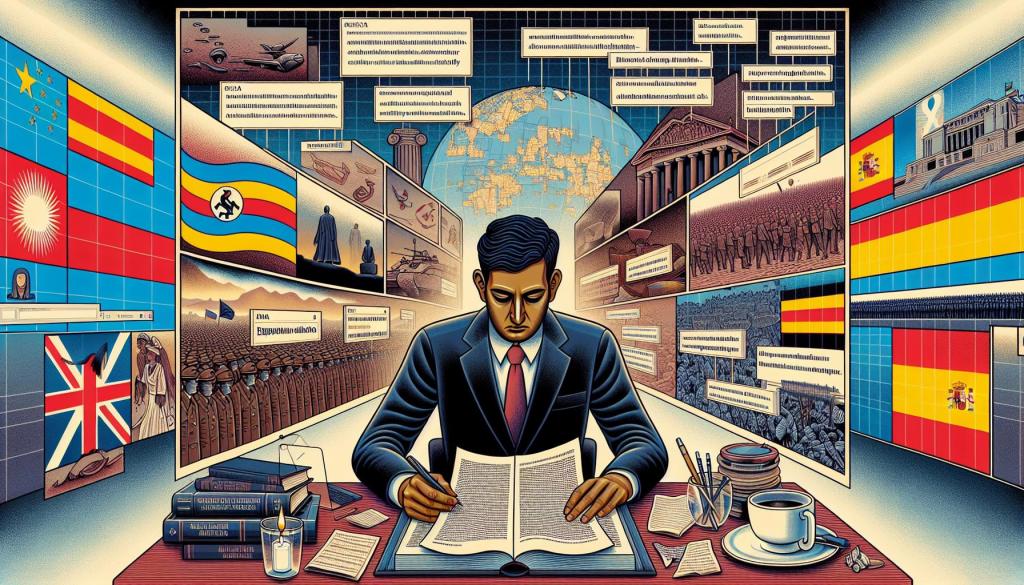
This paper argues that attempts to rewrite the past invariably leave traces that can be used against them. First, it examines the U.S. Foreign Relations of the United States (FRUS) series as an “archive against amnesia,” showing how bureaucratic record‑keeping both enables and constrains state efforts to sanitize history. It then turns to Rwanda, post‑communist Eastern Europe, and democratic Spain to analyze how regimes in transition manipulate memory to secure power, and how such strategies generate enduring moral deficits. Finally, it explores deepfakes and digital misinformation, contending that only robust historical literacy can anchor public truth in an age of infinitely editable records.
Across archives, transitional regimes, and digital platforms, attempts to “revise away” difficult histories are persistent but never complete. Institutional records, political struggles over memory, and the nature of digital evidence together show that history continually reasserts itself through traces that resist full erasure, even as those traces can be distorted, delayed, or weaponized.
Official state archives demonstrate the paradox of bureaucratic memory. The Foreign Relations of the United States (FRUS) series presents itself as the “official documentary historical record” of major U.S. foreign policy decisions, curated and published by the government itself [2]. Its authority lies in being both canonical and documentary: instead of a single narrative, FRUS offers memoranda, cables, minutes, and transcripts that preserve internal disagreement, miscalculation, and uncertainty. Editorial notes in volumes on, for example, 1961–63 foreign relations direct readers to Department of State Central Files, flagging where summaries have been made and pointing to underlying documents [1]. This layered structure—original files, editorial apparatus, and published extracts—produces a dense paper trail. Even redactions and omissions leave visible seams in the record through file numbers, cross‑citations, and references to unprinted material.
By organizing its volumes by presidential administration and, for later periods, by individual years (e.g., 1946, 1947, 1948 under Truman), the FRUS series builds a state‑engineered “memory architecture” that invites users to track continuities and ruptures across time [2][3]. Lincoln through Harrison appear as a chronological gallery of executive power, while more recent administrations are subdivided into thematic and temporal clusters. This architecture stabilizes a long‑duration, searchable, and cross‑referenced account of foreign policy. Yet it is not neutral. Selection, redaction, and editorial framing clearly shape what is foregrounded and what is relegated to archival shadows. At the same time, the very classification systems and referencing practices that support state self‑representation also furnish the connective tissue historians need to reconstruct suppressed or inconvenient episodes. The effort to control memory generates a corpus that later undermines sanitized narratives. History cannot be simply unwritten; it sediments into catalogues, finding aids, and editorial notes that, decades later, enable re‑readings the original custodians might have preferred to avoid.
Regimes in transition further illustrate how power seeks to script collective memory—and how that scripting remains contested and incomplete. In post‑genocide Rwanda, transitional justice mechanisms operate within a wider project of radical social engineering [1]. The government’s tight control over speech and political life is coupled with a strong emphasis on a state‑sanctioned narrative of the 1994 genocide. Commemorations, education, and legal prohibitions on “genocide ideology” all work to entrench a particular account of past violence as the foundation of present legitimacy. Yet, while this narrative is heavily institutionalized, large‑scale atrocities committed by Rwandan forces in Congo, and the absence of accountability for those crimes, are effectively excluded from permissible public discourse [1]. Memory policy thus doubles as a technology of selective amnesia: it demands constant remembrance of certain horrors while structurally occluding others. Justice becomes entwined with forgetting, turning the “irrevisable” past into an uneven terrain where some victims’ experiences are hyper‑visible and others nearly unsayable.
Post‑communist Eastern Europe exposes a different configuration of manipulated memory. Lustration laws intended to expose and limit the influence of former communist collaborators were crafted in unusually mild form, in part because many key actors in the democratic transition feared that robust reckoning would reveal their own complicity [2]. Over time, lustration lost credibility as a universal moral project and came to be perceived as a partisan tool, instrumentalized to damage opponents while leaving systemic failures and economic mismanagement unaddressed [2]. The negotiated nature of the transition, and the quick reintegration of former elites, encouraged a politics of deliberate ambiguity about responsibility. Here, the “third lesson” of history is not that the past disappears, but that it is blurred—kept formally present but substantively under‑specified to protect the legitimacy of those now in power. The unresolved legacy of authoritarianism lingers as a moral deficit in democratic institutions that claim to have broken with prior abuses.
Even in consolidated democracies, the struggle over historical narrative plays out in mundane but consequential ways. In Spain, the fate of Francoist street names across municipalities shows how parties embed their preferred past into physical space. A large‑scale empirical study finds that right‑wing mayors are significantly more likely to retain streets honoring the dictatorship, whereas left‑wing mayors tend to remove these names and replace them with figures aligned with their own ideological traditions [3]. Public space becomes a palimpsest of partisan memory, even when the broader population may favor more inclusive or critical commemorations. This slow re‑inscription of history onto the map does not erase Francoism; it relocates and reframes it, leaving new generations to navigate a landscape where conflicting narratives are encoded in everyday geography.
Across these cases, political elites deploy law, education, public symbols, and controlled speech to shape how societies remember. Yet none of these strategies fully succeeds in revising the past away. Suppressed episodes persist as rumors, family stories, external reports, and, crucially, in the partial visibility of archives and legal records. The longer they are denied or distorted, the greater the eventual backlash when they resurface. Acknowledgment of difficult history emerges not only as a moral imperative for victims, but as a practical condition for building sustainable trust in institutions that claim to represent a break with prior violence.
Digital technology intensifies both the resilience and the manipulability of historical memory. On the one hand, pervasive recording, storage, and duplication make it harder to simply destroy evidence of events. On the other, tools like deepfakes introduce a qualitatively new challenge: instead of erasing the record, they flood it with plausible falsehoods. Deepfakes—AI‑generated audio‑visual forgeries—threaten the status of recorded images and sounds as trustworthy proof [1]. Early open‑source deepfake platforms were rapidly adapted for non‑consensual sexual content and political disinformation, demonstrating how quickly such tools can be weaponized once widely available [1]. Their danger lies not only in individual instances of deception, but in what they do to epistemic baselines: if convincing fakes are known to exist, then any inconvenient recording can be dismissed as fabricated, and any fabricated recording can be believed by those predisposed to accept it.
This environment corroded the assumption that some empirical facts—scientific results, documented atrocities, electoral tallies—could serve as shared reference points, “true irrespective of how we feel about them” [1]. Where conspiracy narratives or falsified footage gain majority belief within communities, historical memory itself becomes a battlefield on which rival, incompatible pasts are lived as real. Moreover, the impact of any given deepfake is highly context‑dependent and often only apparent after circulation; by the time a forgery is exposed, reputations may be destroyed, political events reshaped, or violence incited in ways that cannot be fully undone [1]. Here, irreversibility acquires a new dimension: history is not only what actually happened, but also what people were led to believe happened at the time, beliefs that may never be completely corrected.
Given this fragility of digital evidence, educators argue that historical literacy must be treated as civic infrastructure rather than a specialized academic concern. Teaching in an era saturated with misinformation and algorithmically tailored feeds, some practitioners frame history courses as training grounds for evaluating contested claims in real time [2]. Students are taught to ask basic sourcing questions—who created this text or image, in what context, for which audience, with what evidence?—and to practice close reading, annotation, and inferential reasoning [2]. These classroom techniques function as micro‑level “memory infrastructures,” equipping citizens to engage critically with digital traces instead of passively consuming them. They do not eliminate the risk of deepfakes or misinformation, but they increase the capacity of communities to identify distortions and to reconstruct more reliable accounts from conflicting sources.
The convergence of these domains—state archives, transitional justice, symbolic politics, and digital media—clarifies the stakes of the claim that history “can’t be revised away.” Official series like FRUS show that even highly curated records contain enough connective tissue to enable later challenges to sanitized narratives [1][2][3]. Regimes that instrumentalize memory to entrench power, whether in Rwanda, post‑communist Eastern Europe, or democratic Spain, discover that unresolved injustices and partisan commemorations persist as sources of moral and political instability [1][2][3]. Digital technologies amplify both the permanence of traces and the ease with which those traces can be manipulated, making critical literacy and robust verification practices essential [1][2].
History, in this sense, is less a fixed story than an accumulation of records, memories, and interpretations that can never be fully aligned with the interests of those who seek to control it. Attempts at erasure or radical revision leave their own marks—in redactions, missing files, skewed street names, lopsided tribunals, viral forgeries, and the pedagogical responses they provoke. These marks become part of the record future historians will read. The third lesson is thus double‑edged: no regime or technology can make an uncomfortable past simply vanish, but neither is the surviving record automatically truthful. The enduring task is to build institutions, archives, and civic capacities that recognize both the impossibility of total revision and the constant danger of distortion.
Conclusion
Across archives, regimes, and digital platforms, the same lesson emerges: history resists deletion. The FRUS series shows how even state‑curated records generate traces that make total erasure impractical. Comparative cases from Rwanda, post‑communist Europe, and Spain reveal how memory politics can entrench power, hollow out justice, and embed partisan narratives in law and landscape—yet never fully cancel inconvenient pasts. In the digital arena, deepfakes and algorithmic feeds threaten to swamp public memory, but they also expose the need for robust verification and historical literacy. Together, these strands affirm the paper’s claim: history can be obscured or manipulated, but it cannot be revised away.
Sources
[1] https://history.state.gov/historicaldocuments/frus1961-63v11/comp1
[2] https://history.state.gov/historicaldocuments
[3] https://history.state.gov/historicaldocuments/truman
[4] https://www.cambridge.org/core/books/memory-and-justice-in-postgenocide-rwanda/from-violent-repression-to-political-domination/8E41EBDF03D1F1678E9DBA2150BB4441
[5] https://link.springer.com/article/10.1007/s11186-020-09401-5
[6] https://www.sciencedirect.com/science/article/pii/S0962629823000185
[7] Faragó, P. “Deep Fakes – An Emerging Risk.” Tilburg Papers in Culture Studies, No. 237. https://pure.uvt.nl/ws/portalfiles/portal/48995735/TPCS_237_Farago.pdf
[8] “History Can’t Wait: Teaching in an Age of AI and Misinformation.” https://www.wonderexplorelearn.com/history-cant-wait-teaching-in-an-age-of-ai-and-misinformation/
[9] “Writing an Abstract for Your Research Paper.” University of Wisconsin–Madison Writing Center. https://writing.wisc.edu/handbook/assignments/writing-an-abstract-for-your-research-paper/
Written by the Spirit of ’76 AI Research Assistant


 Realizing News
Leave a comment