Introduction
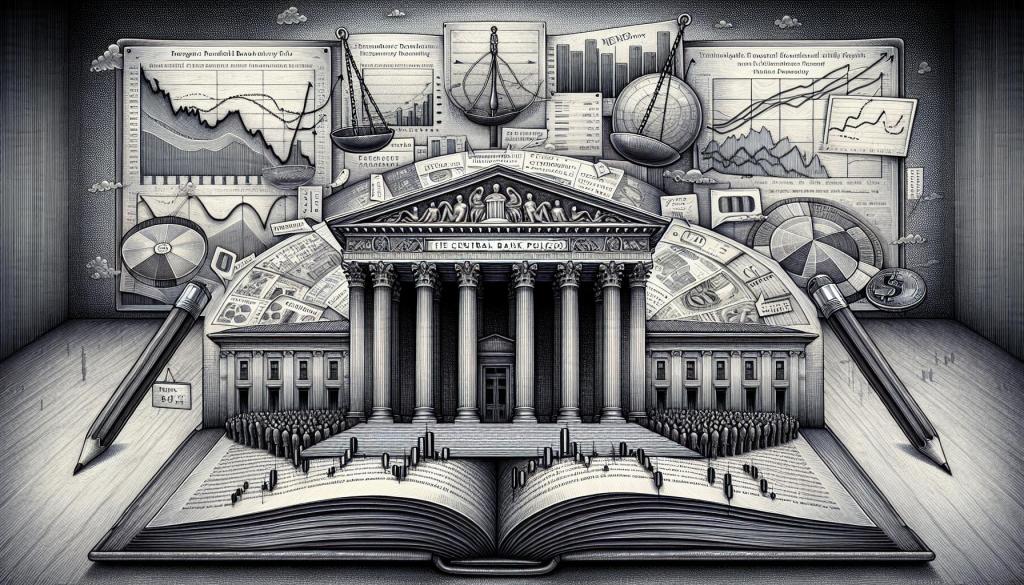
Kevin Warsh’s prospective elevation to Federal Reserve chair raises a central question: would he fundamentally redirect the institution away from the Bernanke–Yellen–Powell paradigm? This report examines three dimensions of that potential regime change. First, it explores Warsh’s preference for rules‑based policy, a smaller balance sheet, and a sharp pullback from routine forward guidance. Second, it analyzes early market reactions and what they imply for the future of the “Fed put,” term premia, and volatility. Third, it assesses how Warsh might navigate Fed independence, internal governance, and an unusually fraught relationship with the White House.
Kevin Warsh’s prospective leadership of the Federal Reserve would represent a substantive regime shift from the Bernanke–Yellen–Powell era, along three main dimensions: the policy framework and toolkit, the Fed’s interaction with financial markets, and the institutional balance between independence, political pressure, and crisis activism.
Warsh’s preferred policy framework departs from the discretionary, communication‑heavy style that has characterized the Fed since the global financial crisis. He is skeptical of elaborate forward guidance in normal times, arguing that the central bank has become overly reliant on detailed signaling of the future rate path. In his view, the Volcker and early Greenspan periods—when the Fed communicated sparingly yet still delivered disinflation and robust growth—better illustrate how a modern central bank should behave [1]. This implies a move away from meeting‑by‑meeting fine‑tuning and toward rules‑anchored behavior: policy settings and communications more tightly moored to explicit frameworks rather than evolving discretionary judgments. Relative to Bernanke’s and Yellen’s extensive use of forward guidance, and Powell’s continued though more restrained practice, a Warsh Fed would likely relegate guidance to a supplemental role, especially when rates are above the effective lower bound.
Warsh is also a persistent critic of the Fed’s expanded balance sheet and the broader institutional drift that accompanied unconventional policies. He has questioned both the size and composition of the balance sheet and has called for retrenching from the routine use of large‑scale asset purchases and other extraordinary tools [1]. Market observers interpret this as a preference to materially shrink the Fed’s holdings, reduce its presence at the long end of the yield curve, and rely less on quantitative easing to suppress term premia [4], [5]. Some of his arguments—for example, that aggressive balance‑sheet reduction could itself create room for lower policy rates by tightening financial conditions—have drawn criticism as overly mechanistic and inattentive to the technical constraints of operating in a large‑reserves, floor‑system environment [3]. This tension raises a practical question: how far he would push normalization once confronted with market‑functioning risks, given his stated willingness to cross traditional lines only in genuine emergencies [2].
The combination of a more rules‑oriented stance, skepticism of prolonged ultra‑easy policy, and concern over institutional overreach suggests a chair inclined to tighten earlier in expansions and to place greater weight on inflation and financial‑stability risks. Warsh has argued for re‑examining what he sees as “inflation dogma” and communicated discomfort with long periods of negative real rates and repeated resort to unconventional tools. This philosophy points to a regime less willing to tolerate persistent inflation overshoots or accommodate asset‑price booms. Compared with his predecessors, he would likely bring unconventional policies and detailed guidance back to the periphery of the toolkit, using them sparingly and temporarily rather than as a quasi‑permanent feature of the framework [1], [2], [4].
Financial markets have begun to internalize this potential shift. The news of Warsh’s selection prompted an immediate strengthening of the dollar and a selloff in longer‑dated Treasuries, with 30‑year yields rising about five basis points on the day [1]. The move concentrated at the long end of the curve suggests investors are building in a higher term premium and/or a higher expected path of policy, consistent with the view that a Warsh Fed would be less inclined to use its balance sheet to compress long‑term yields. Research from within the Federal Reserve System underscores how earlier rounds of asset purchases helped flatten the yield curve and dampen term premia [2]; a less interventionist Warsh regime could allow these premia to normalize, re‑steepening the curve and restoring more traditional duration risk to portfolios.
This evolving market pricing ties directly into the debate over the “Fed put.” Under Bernanke, Yellen, and Powell, investors often inferred an implicit commitment that sufficiently sharp asset‑price declines would elicit easier monetary policy or liquidity support. Warsh’s record and rhetoric point toward a higher “strike price” for any such put, if not an outright redefinition. He has emphasized the dangers of asset bubbles, misallocated capital, and the moral hazard created by repeated rescues. A Warsh Fed would likely be less inclined to validate every equity or credit drawdown with new easing and more focused on long‑run financial stability, even at the cost of higher near‑term volatility in rates and risk assets [3], [4]. Market behavior so far—firmer dollar, modest rise in long yields, but equity indices absorbing the nomination without severe stress [5]—suggests investors are slowly repricing this change rather than assuming an overnight disappearance of the Fed backstop.
Overlaying these policy and market dimensions is a significant institutional and political realignment. Warsh would inherit a Federal Reserve that has become the de facto “first responder” to crises and a central node in global dollar liquidity. Yet his own writings advocate shifting primary responsibility for crisis response back toward fiscal authorities, with the Fed playing a more constrained role [2]. That stance implies reluctance to repeat the breadth and speed of the 2008–2020 interventions—emergency lending facilities, expansive quantitative easing, and ad hoc backstops—except in extreme conditions. For proponents, this would restore a clearer division of labor between monetary and fiscal policy and scale back what they view as “hyper‑activism” [2], [5]. Critics, however, warn that a more reticent Fed might leave markets and foreign central banks without the stabilizing anchor they have grown to expect, amplifying global spillovers in the next shock [2].
Warsh’s tenure would also be shaped by an unusually intricate internal governance context. Jerome Powell could remain on the Board of Governors and on the Federal Open Market Committee after stepping down as chair, a configuration not seen in roughly eight decades [1]. This would introduce an internal counterweight with recent chair experience and established credibility, potentially complicating Warsh’s ability to define and enforce a new regime. Unlike prior transitions where the outgoing chair departed the Board, Warsh would need to secure consensus within an FOMC that includes his immediate predecessor—someone closely associated with the very policies he is inclined to recalibrate.
The external political environment further complicates his task. Warsh would assume office under a president who has repeatedly attacked the Fed and, in Powell’s case, escalated pressure through public criticism and legal threats. Observers have raised concerns about possible implicit understandings between Trump and Warsh regarding the desired policy stance, especially given Trump’s preference for low rates and Warsh’s established reputation as an inflation hawk [1], [2], [4]. This mismatch creates reputational and credibility risks: early rate cuts or balance‑sheet expansions could be interpreted as political accommodation rather than data‑driven decisions, while a more hawkish course could provoke renewed presidential attacks and deepen public doubts about the Fed’s independence [1], [5].
Navigating this narrow corridor would demand careful signaling. If Warsh is perceived as too responsive to the White House, he risks alienating other governors and Reserve Bank presidents whose cooperation is necessary for effective policymaking [1]. If he pushes back too assertively, the Fed could again become a central target of presidential ire, undermining institutional legitimacy and clouding communications with markets and the public. This balancing act is more acute than that faced by Bernanke, Yellen, or Powell, who operated under political scrutiny but without the same combination of overt presidential retaliation, legal jeopardy, and explicit expectations of personal loyalty.
Taken together, these elements point to a meaningful departure from the trajectory set by Warsh’s predecessors. A Warsh Fed would likely be more rule‑conscious, more skeptical of an ever‑expanding toolkit and balance sheet, less reliant on forward guidance, and more willing to allow market and yield‑curve dynamics to reflect underlying risks. At the same time, it would operate under tighter political constraints and with a more contested internal hierarchy. Whether this regime delivers stronger long‑run price and financial stability or instead introduces new vulnerabilities will hinge on how Warsh balances his philosophical commitments with the practical demands of crisis management, market expectations, and the preservation of central bank independence.
Conclusion
Kevin Warsh’s prospective tenure would represent a genuine break from the Bernanke–Yellen–Powell template. His emphasis on rule‑like policy, a smaller and less interventionist balance sheet, and a retreat from routine forward guidance points to a structurally more hawkish, less activist Fed. Markets are already treating this as a re‑pricing of the Fed put: higher long‑term yields, a firmer dollar, and an expectation of greater volatility and term premia. At the same time, Warsh would inherit an unprecedented internal dynamic with Powell still on the Board and an unusually fraught relationship with the White House, testing both the Fed’s independence and its crisis‑management role.
Sources
[1] https://www.pimco.com/us/en/insights/under-a-warsh-fed-expect-a-thoughtful-policy-approach
[2] https://www.hoover.org/research/inflation-choice-kevin-warsh-fixing-federal-reserve
[3] https://m.fastbull.com/news-detail/warsh-has-a-fairy-tale-view-of-fed-4339503_0
[4] https://finance.yahoo.com/news/warsh-regime-change-faces-steep-110701793.html
[5] https://www.reuters.com/business/finance/trumps-fed-nomination-ease-market-uncertainty-all-eyes-warsh-2026-01-30/
[6] Bloomberg: “Dollar Rises, US Bonds Fall as Trump Set to Choose Warsh for Fed” — https://www.bloomberg.com/news/articles/2026-01-30/treasury-yields-rise-on-expectations-warsh-will-be-fed-chair
[7] Federal Reserve Bank of Richmond Economic Brief (2018-12): “Term Premium and Yield Curve Inversions” — https://www.richmondfed.org/-/media/richmondfedorg/publications/research/economic_brief/2018/pdf/eb_18-12.pdf
[8] “Maintaining the Strength of American Capitalism” (Economic Strategy Group, 2019) — https://www.economicstrategygroup.org/wp-content/uploads/2019/12/Maintaining-the-Strength-of-American-Capialism.pdf
[9] University of Virginia Darden School of Business: “Kevin Warsh for Fed Chair: What It Means for Rates” — https://news.darden.virginia.edu/2026/01/30/kevin-warsh-for-fed-chair-what-it-means-for-rates/
[10] The New York Times: “Stock Market Takes Kevin Warsh’s Fed Nomination in Stride” — https://www.nytimes.com/2026/01/30/us/politics/stock-market-kevin-warsh-fed.html
[11] https://www.yakimaherald.com/news/nation_and_world/nation/warshs-challenge-navigating-fed-independence-and-trumps-demands/article_a73451e1-640b-50b6-a7b1-d2abd100b86d.html
[12] https://www.atlanticcouncil.org/dispatches/trump-warsh-federal-reserve-inflation/
[13] https://www.city-journal.org/article/federal-reserve-chair-jay-powell-inflation-interest-rates
[14] https://finance.yahoo.com/news/live/federal-reserve-live-coverage-fed-holds-interest-rates-steady-amid-political-pressure-141347391.html
[15] https://www.wsj.com/economy/central-banking/kevin-warshs-three-tasks-shrink-the-fed-tame-inflation-manage-the-president-2640eace
Written by the Spirit of ’76 AI Research Assistant
 Realizing News
Leave a comment