Introduction
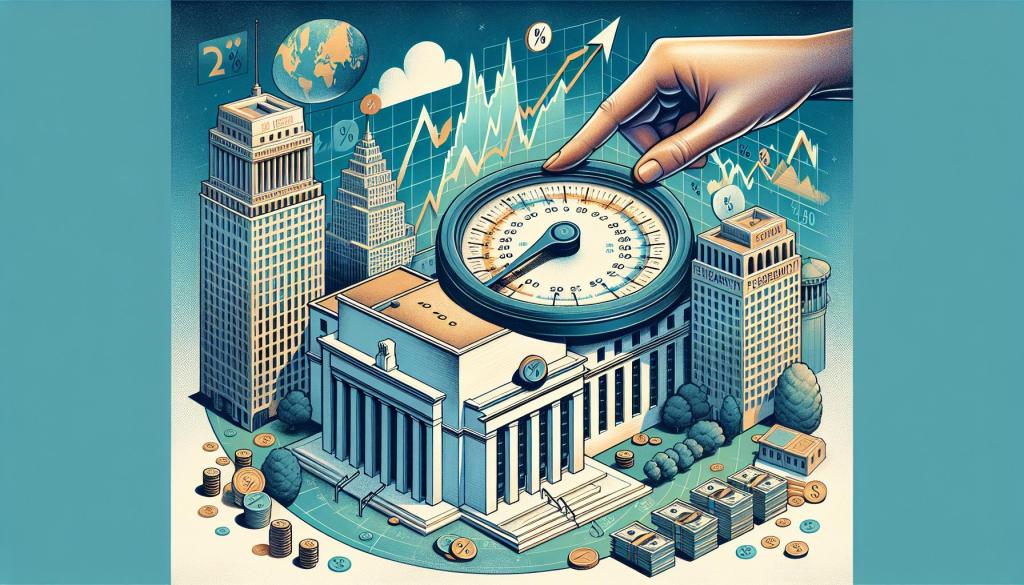
What happens when the White House, not the Federal Reserve, effectively sets interest rates? This report examines the economic risks of a president informally controlling U.S. monetary policy in 2026. We first survey the theory and evidence behind central bank independence, showing how political interference tends to raise inflation without boosting growth. We then turn to comparative cases—from Turkey to Argentina—to illustrate how presidential capture of central banks destabilizes currencies, credit, and institutions. Finally, we assess what sustained pressure on the Fed would mean for U.S. inflation, the dollar’s reserve status, and the future of Treasuries as the world’s premier safe asset.
Presidential control over interest rates would fundamentally alter the U.S. monetary regime by subordinating the Federal Reserve’s technocratic judgment to the executive’s short‑term political incentives. Cross‑country evidence, U.S. historical experience, and new archival research converge on a clear pattern: when elected leaders can steer rates, the gains in real activity are meager, while the costs in inflation, financial stability, and currency credibility are large, persistent, and difficult to reverse.
The institutional design of modern central banking is built around a core bargain: elected officials set broad mandates (such as price stability and maximum employment), and an independent central bank chooses the interest‑rate path to achieve them. This arrangement addresses the “time‑inconsistency” problem: politicians are tempted to run the economy “hot” before elections and worry about inflation later. When “monetary authorities are dominated by elected politicians,” empirical work finds higher and more volatile inflation, particularly around changes in government, whereas “a relatively independent central bank…will not change its policy after a new government has been elected,” which stabilizes inflation outcomes over time [1]. Moving from low to high central bank independence (CBI) cuts long‑run inflation by about 3.7 percentage points in advanced economies—and by more than 10 points in developing countries—because greater independence anchors expectations and reduces inflation persistence [2]. These benefits accumulate slowly: if a president forces the Fed to hold rates artificially low for several years, inflation tends to drift upward and becomes entrenched, requiring a long and painful tightening cycle to undo.
Within that broad picture, the form of independence matters. Research distinguishes “political” independence—insulation of central bank leaders from direct electoral pressures—from narrow, rigid mandates that might prioritize inflation at the expense of crisis management [3]. Political independence of governors is crucial for resisting inflationary pressure from presidents, but excessively tight legal mandates could also make central banks too timid in responding to banking crises, worsening output losses. The optimal design combines strong political insulation (to prevent presidential rate‑cut decrees) with sufficient mandate flexibility to allow aggressive action in crises, as long as that flexibility is exercised by technocrats rather than deployed as a tool of presidential politics.
New U.S.-specific archival evidence makes the inflationary effects of presidential pressure concrete. By mapping personal interactions between presidents and Fed officials from 1933–2016 and identifying episodes of explicit pressure, researchers find that such pressure “strongly and persistently raises inflation and inflation expectations but has little impact on economic activity” [4]. That pattern held in episodes such as Lyndon Johnson’s arm‑twisting of Fed Chair William McChesney Martin and Richard Nixon’s campaign for easier money in the early 1970s. Monetary policy shifted toward easier conditions, inflation and inflation expectations moved higher, yet the durable boost to real growth was small, and the eventual disinflation (under Paul Volcker) required a severe recession. In effect, political control over rates trades a modest, short‑lived output uptick for a large and protracted inflation problem.
Comparative experience from countries where presidents have openly subordinated central banks to their agenda shows a similar but more extreme trajectory. Turkey is the clearest contemporary case. Since 2018, President Recep Tayyip Erdoğan has repeatedly fired central bank governors who resisted his insistence that interest rates be cut despite rising inflation. The result was an inflation spike reaching roughly 80–85% in 2022, sharp depreciation of the lira, capital flight, and increased capital controls [1][4]. Even after the central bank later pushed rates into the 45–50% range to fight inflation, markets demanded a steep risk premium; credibility had been so damaged that merely raising rates could not quickly restore trust [1][3][4]. Similar patterns appear in Argentina and Venezuela, where presidentially dominated central banks helped monetize fiscal deficits, culminating in “high and accelerating inflation” and deep currency distrust [1][2][4][5]. Across countries, studies consistently show that more independent central banks achieve lower inflation without higher average unemployment, and that once independence is eroded, inflation shocks become more volatile and longer‑lived because the credibility anchor is gone [2][3][5].
These international cases highlight additional channels by which presidential control over rates would damage the U.S. economy even if outright hyperinflation remained unlikely. First, markets quickly reprice political risk into domestic interest rates. When investors believe the central bank effectively serves “at the pleasure” of the president, they demand a political‑interference premium on government debt, raising borrowing costs for the state, firms, and households. Turkey’s experience—sharp lira depreciation, surging bond yields, and a persistent risk premium even after aggressive hikes—illustrates how this premium, once embedded, is slow to unwind [1][3][4]. Second, the culture and internal decision‑making of the central bank shift. If Fed leaders and staff perceive that resisting presidential demands on rates could trigger dismissal, legal harassment, or public vilification, dissent and debate inside the institution dry up. Policy decisions tilt systematically toward the executive’s short‑term electoral needs, and, in weaker systems, even toward selective credit allocation favoring political allies [1][3][4]. While U.S. laws and norms are stronger than in many emerging markets, the basic incentive logic is the same: fear of retaliation discourages independent judgment.
For global investors and foreign governments, the central concern is what politicized U.S. monetary policy would mean for core safe assets, especially U.S. Treasuries and the dollar. The new archival work on U.S. presidential pressure shows that such interference materially alters inflation expectations: pressure campaigns cause markets to mark up both expected inflation and uncertainty around future inflation paths [1][2][4]. The economic drag in these episodes arises not from any surge in real activity but from “precautionary behavior”: households, firms, and investors guard against higher and more uncertain inflation by shortening the maturity of contracts, demanding higher yields, and shifting portfolios toward real assets. An analysis leveraging Drechsel’s results concludes that loss of Fed independence delivers “the worst of both worlds”: higher inflation and volatility premia with negligible real gains [2].
Cross‑country research on political pressure and exchange rates confirms that occasional political remarks are usually shrugged off, but persistent, credible interference moves currencies and bond markets. A multi‑country study finds that repeated, high‑profile demands for easier policy—especially in countries with weaker institutions—lead to systematic depreciation of the local currency against the dollar, with the average daily impact of such comments increasing as markets internalize the erosion of independence [3]. Turkey again stands out: Erdoğan’s public insistence on low rates contributed to a self‑reinforcing lira slide, which further stoked inflation and forced ever more aggressive policy responses [3][4][5]. Similar dynamics have appeared in Argentina when presidents overruled central bankers in the face of rising prices [5]. Applied to the U.S., if markets came to view the Fed as an arm of the presidency, they would likely require higher inflation risk premia on Treasuries and begin diversifying reserves into other currencies or gold, incrementally eroding the dollar’s dominant safe‑asset status.
Finally, there are important dynamic and precedential risks. Even if a given episode of presidential pressure in 2025 did not immediately dissolve Fed independence in a Turkish or Argentine fashion, its partial success would normalize a new pattern of executive behavior. Once one president demonstrates that publicly attacking the Fed, threatening leadership changes, or tying appointments and regulatory decisions to rate‑cut commitments yields looser policy, future presidents have a powerful incentive to replicate and escalate those tactics [5][6]. New archival evidence showing how sensitive inflation outcomes have been to historical episodes of presidential–Fed interaction underscores how such normalization can, over time, push the U.S. toward structurally higher and more volatile inflation [4][5]. The more political pressure becomes “priced in” as a regular feature of the system rather than an aberration, the more fragile the underlying technocratic guardrails become.
Taken together, the evidence from political‑economy theory, cross‑country comparisons, financial‑market responses, and U.S. archival data points in the same direction. Allowing the president to control interest rates would reduce the Federal Reserve’s political independence, undermining its ability to anchor inflation and manage crises. The most likely outcome is not immediate hyperinflation, but a gradual regime shift toward higher and more persistent inflation, elevated risk premia on U.S. debt, greater exchange‑rate and bond‑yield volatility, and a slow erosion of the dollar’s pre‑eminent role as the world’s safe asset. Reversing such a shift would require not only painful tightening but also the difficult task of rebuilding institutional credibility once markets and citizens have learned to expect politics, rather than technocratic judgment, to drive monetary policy.
Conclusion
Taken together, the evidence paints a consistent and sobering picture. When presidents successfully steer interest rates, inflation rises more than growth, shocks last longer, and the eventual cleanup is painful. Cross‑country experience—from Turkey to Argentina—shows how politicized central banks lose credibility, drive currency weakness, and invite capital flight. U.S. history and new archival work confirm that even informal presidential pressure on the Fed lifts inflation expectations without delivering durable real gains. If a future administration normalizes control over interest rates, the most likely outcome is not immediate crisis, but a gradual erosion of price stability, institutional resilience, and dollar safe‑asset status.
Sources
[1] https://ies.princeton.edu/pdf/SP19.pdf
[2] https://cepr.org/voxeu/columns/it-matters-even-more-central-bank-independence-long-run-inflation-and-persistence
[3] “The Economic Consequences of Banking Crises: The Role of Central Banks and Optimal Independence,” American Political Science Review, https://www.cambridge.org/core/journals/american-political-science-review/article/economic-consequences-of-banking-crises-the-role-of-central-banks-and-optimal-independence/4F106BE6406F4B04F0B2AC5F871225D7
[4] “The Economic Consequences of Political Pressure on the Federal Reserve,” VoxEU column, https://cepr.org/voxeu/columns/economic-consequences-political-pressure-federal-reserve
[5] “The Erosion of Central Bank Independence,” Econofact, https://econofact.org/the-erosion-of-central-bank-independence
[6] https://www.businessinsider.com/trump-powell-fed-meddling-markets-investors-turkey-inflation-central-bank-2025-7
[7] https://now.tufts.edu/2025/09/11/whats-federal-reserve-and-why-its-independence-important
[8] https://www.npr.org/transcripts/nx-s1-5532144
[9] https://ca.rbcwealthmanagement.com/john.vidas/blog/4618328-When-Central-Banks-Fall-The-Cost-of-Losing-Monetary-Independence-in-the-US-and-Beyond/
[10] https://www.npr.org/2025/10/03/nx-s1-5536835/central-banks-globally-have-faced-political-pressure-heres-what-happened-there
[11] Joachim Klement, “The Fed under political pressure,” Klement on Investing (Substack). https://klementoninvesting.substack.com/p/the-fed-under-political-pressure
[12] “Political pressure on central banks and exchange rates,” Economic Research Forum Working Paper 2112. https://eaf.ku.edu.tr/wp-content/uploads/2021/08/erf_wp_2112.pdf
[13] “Inflation and authoritarianism are behind Turkey’s financial crisis,” Manhattan Institute. https://manhattan.institute/article/inflation-and-authoritarianism-are-behind-turkeys-financial-crisis
[14] “The Political Threat to Central Bank Independence and Its Impact on Financial Markets,” AInvest. https://www.ainvest.com/news/political-threat-central-bank-independence-impact-financial-markets-2601/
Written by the Spirit of ’76 AI Research Assistant




 Realizing News
Leave a comment