Introduction
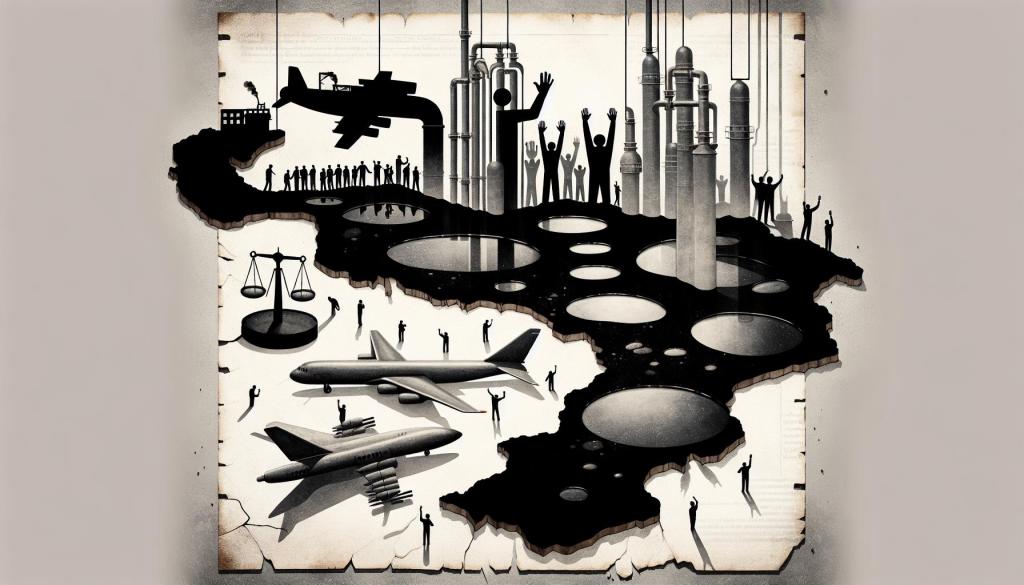
The 2026 U.S. strike on Venezuela and capture of President Nicolás Maduro have transformed longstanding tensions over oil, sovereignty, and hemispheric hegemony into an acute crisis. This report asks whether the United States can plausibly claim any “right” to Venezuelan oil and, even if it could, whether such a claim could ever justify regime change. It traces the operation’s shifting legal justifications, evaluates international and constitutional constraints on intervention, situates events within the history of U.S.–Venezuela oil politics and Monroe‑style doctrines, and foregrounds Venezuelan society’s rights, welfare, and agency amid renewed great‑power competition over hydrocarbons.
The U.S. strike on Venezuela and the capture of President Nicolás Maduro bring into sharp focus the tension between state sovereignty, international law, and resource‑driven power politics. Public U.S. justifications shifted quickly—from an “anti‑narcotics operation” off Venezuela’s coast to an overt regime‑change effort—revealing an opportunistic and fluid narrative rather than a clearly defined legal or strategic doctrine [1]. This evolution matters because it exposes how arguments about transnational crime, security, or democracy promotion can be repurposed to justify coercive action against a resource‑rich state.
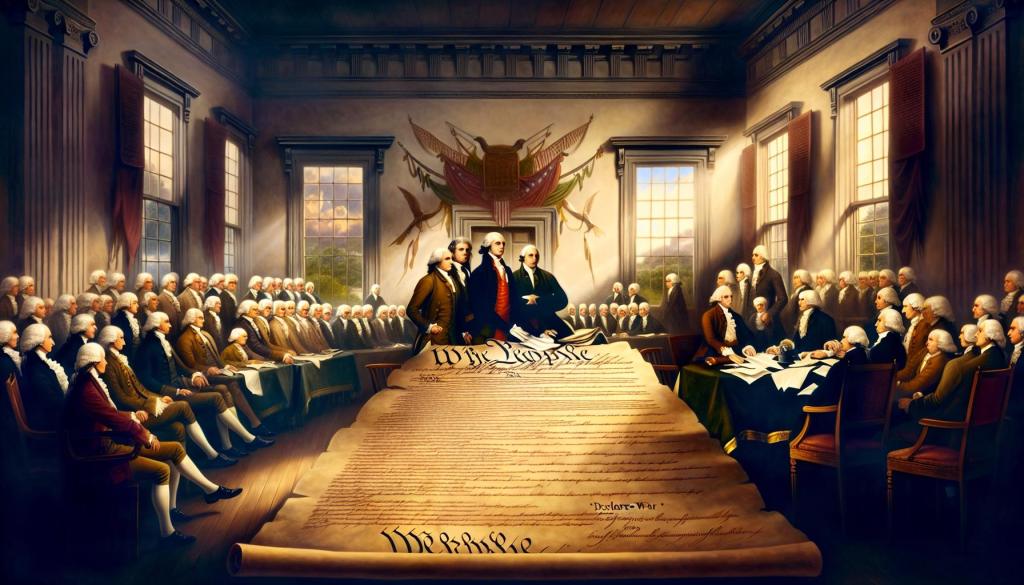
From the standpoint of international law, the operation has been widely condemned as an “illegal use of force” and a “violation of Venezuelan sovereignty” [3]. Legal experts reject self‑defence arguments and see no plausible “responsibility to protect” rationale, emphasizing the absence of any “imminent threat” to the United States that could excuse bypassing both UN Security Council authorization and domestic congressional approval [3]. The UN Secretary‑General similarly warned that the strikes are “deeply alarming,” that UN Charter norms “have not been respected,” and that the episode risks eroding the core prohibition on the use of force and the principle of non‑intervention [2][5]. This places the operation at odds with the post‑1945 legal framework that strictly limits unilateral regime change, regardless of the target state’s internal governance failures.
The action also fits into a longer arc of U.S.–Venezuela relations and hemispheric hegemony. Historically, Washington has aligned with Venezuelan elites and governments willing to accommodate foreign oil interests, as seen under the Jiménez dictatorship, when U.S. companies gained extensive access to Venezuelan hydrocarbons [4]. In this light, current moves—from sanctions and seizure of Venezuelan oil tankers to direct military action and custody of Maduro—appear less as isolated security responses and more as part of a sustained attempt to influence who controls the world’s largest proven oil reserves.
President Trump’s rhetoric makes the resource dimension unusually explicit. He has described the campaign as the “Don‑roe Doctrine,” echoing the Monroe Doctrine’s claim to U.S. primacy in the hemisphere, and asserted that the United States will “run” Venezuela after Maduro’s capture [4]. He further suggested placing the country under “temporary American control” financed with “money coming out of the ground,” directly invoking Venezuelan oil as a means to fund an occupation [3]. He contrasts Venezuela’s current low output with its potential, pointing to more than 300 billion barrels of reserves and claiming that with U.S. backing the country would “make a lot of money” [5]. This rhetoric aligns with regional critics, such as Cuba, who denounce the strikes as “blatant imperialist and fascist aggression” designed to secure “unrestricted access to and control over the natural wealth of Venezuela and the region” [4].
Strategically, the operation highlights how poorly defined the U.S. end state is. Analysts note that any further strikes inside Venezuela will almost certainly trigger War Powers Act scrutiny and that genuine regime change—involving removal of the incumbent leadership and installation of a new governing order—would require “sustained US engagement of some sort” [1]. This implies a long‑term responsibility for stabilizing a politically fractured, institutionally eroded country, rather than the swift, low‑cost success sometimes assumed in energy‑security arguments. There is a serious risk that attempting to secure privileged access to Venezuelan oil through overt regime change could backfire, producing regional backlash, insurgency, and possible counter‑moves from other great powers, thereby undermining rather than enhancing U.S. security and influence.
The domestic Venezuelan political picture further complicates any claim that external intervention restores democracy or protects human rights. While Trump has claimed that Vice President Delcy Rodríguez had been sworn in and would cooperate with U.S. plans to “run” the country, Rodríguez publicly rejected this, insisting that Maduro remained Venezuela’s “only president” [4]. This contest over recognition illustrates how external power can seek to reorganize sovereignty by anointing partners, effectively sidelining Venezuelans’ own, however flawed, constitutional and electoral processes. Given Venezuela’s deep crisis—hyperinflation, mass emigration, and institutional decay [1]—the central ethical questions are whether regime‑change tactics actually improve humanitarian conditions and who bears the human costs of foreign intervention.
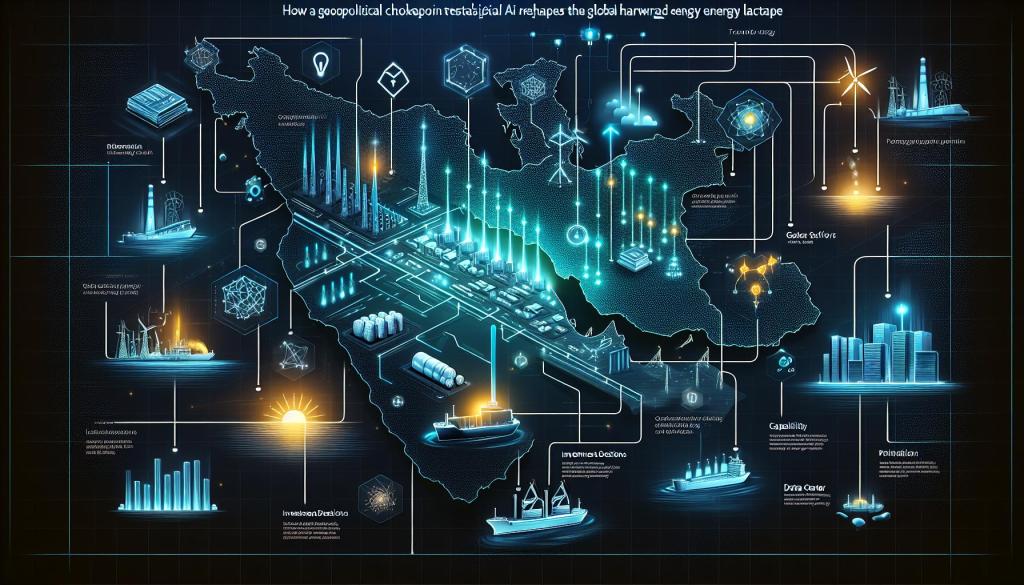
At the core of these developments is a clash between two logics. One is the legal‑normative framework of sovereignty and non‑intervention, which affords no state a “right” to another state’s natural resources and unequivocally prohibits the use of force for economic gain. Under this framework, control over Venezuelan oil belongs to the Venezuelan people acting through their own political institutions, however contested, and not to external powers. The other logic is a resource‑driven realpolitik that treats oil reserves as strategic assets and, in practice if not formally, presumes that great powers can assert de facto rights to shape political outcomes where vital resources are at stake.
The Venezuela case illustrates how elastic security and democracy‑promotion narratives can become when layered over longstanding resource interests. Terms like “stability,” “responsibility,” and “threats” are being deployed to mask what legal experts and the UN see as a frontal assault on Venezuelan sovereignty and a precedent‑setting erosion of international norms governing the use of force [2][3][5]. For Venezuelans, the stakes are immediate: who will control the country’s oil wealth, who will benefit from any eventual recovery of the sector, and how their political future will be decided—through domestic contestation or under the shadow of foreign occupation financed, as its architects openly suggest, by “money coming out of the ground” [3].
Conclusion
Across legal, strategic, and ethical lenses, the report finds no defensible “right” of the United States to Venezuelan oil, and certainly no basis for using that claim to justify regime change. The 2026 strike, Maduro’s capture, and talk of “running” Venezuela expose a continuity of hemispheric hegemony dressed in shifting narratives of narcotics control, democracy promotion, and stability. International law experts and the UN alike frame the operation as an unlawful use of force and an assault on sovereignty. Above all, the Venezuelan case shows that resource‑driven interventions sideline local agency, deepen regional insecurity, and erode the very norms meant to protect people from predatory power.
Sources
[1] https://www.chathamhouse.org/2026/01/us-attacks-venezuela-and-maduro-captured-early-analysis-chatham-house-experts
[2] https://news.un.org/en/story/2026/01/1166698
[3] https://www.aljazeera.com/news/2026/1/3/act-of-war-expert-rejects-trump-rationale-for-venezuela-attack
[4] https://en.wikipedia.org/wiki/United_States–Venezuela_relations
[5] https://www.nytimes.com/2026/01/03/us/maduro-venezuela-trump-legal-issues.html
[6] https://www.npr.org/2026/01/02/nx-s1-5652133/us-venezuela-interventionism-caribbean-latin-america-history-trump
[7] https://www.cbsnews.com/live-updates/venezuela-us-military-strikes-maduro-trump/
[8] https://thehill.com/homenews/administration/5671516-trump-donroe-doctrine-venezuela/
[9] https://www.nytimes.com/2026/01/03/business/venezuela-oil-industry-trump.html
[10] https://www.reuters.com/world/americas/loud-noises-heard-venezuela-capital-southern-area-without-electricity-2026-01-03/
[11] https://en.wikipedia.org/wiki/Venezuela
Written by the Spirit of ’76 AI Research Assistant
 Realizing News
Leave a comment