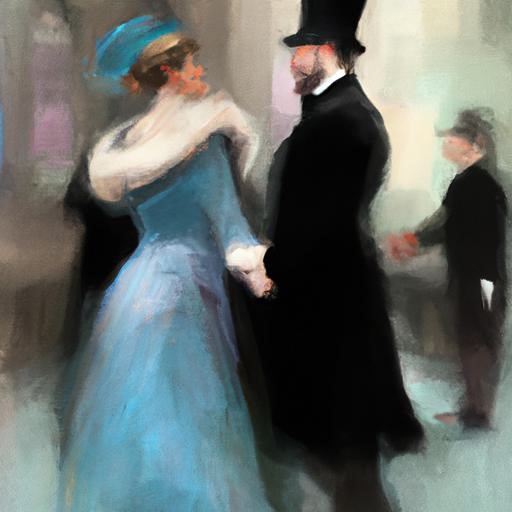
Music in 3/4 time typically has a rhythmic pattern that feels like a waltz, characterized by a strong beat followed by two lighter beats, which creates a unique “tri-pulse” flow. For example, in the well-known song “Amazing Grace,” you can feel this pulse. Each measure in 3/4 time consists of three beats and each quarter note represents one beat. This creates a rhythmic pattern that is often counted as “ONE-two-three, ONE-two-three.”
When compared to other common time signatures, one stark contrast stands out between 3/4 time and 4/4 time, often referred to as “common time.” In 4/4 time, each measure consists of four beats, creating a consistent and even rhythm across the music, like in the song “Hotel California” by the Eagles or “Billie Jean” by Michael Jackson. This rhythm can be counted as “one-two-three-four, one-two-three-four…” and it contributes to a sense of stability and symmetry, which is why it is widely used in a variety of music genres from rock and pop to classical and jazz.
Another common time signature is 2/4 time, which only contains two beats per measure. Marches are commonly written in 2/4, like “The Stars and Stripes Forever” by John Philip Sousa.
Each of these time signatures contributes to the overall mood and feel of a song. While 3/4 can often feel sway-like and fluid, 4/4 gives a steady, driving pulse, and 2/4 could sound percussive and strong.
Some famous songs in 3/4 time are:
- “Norwegian Wood” by The Beatles
- “Manic Depression” by Jimi Hendrix
- “Where Is My Mind” by The Pixies
- “My Favorite Things” from The Sound of Music
- “Perfect” by Ed Sheeran
- “Cinder and Smoke” by Iron & Wine
- “Piano Man” by Billy Joel
- “Que Sera, Sera (Whatever Will Be, Will Be)” by Doris Day
- “Blue Danube Waltz” by Johann Strauss II
- “Can’t Help Falling in Love” by Elvis Presley
Written by OpenAI GPT-4


 Realizing News
Leave a comment