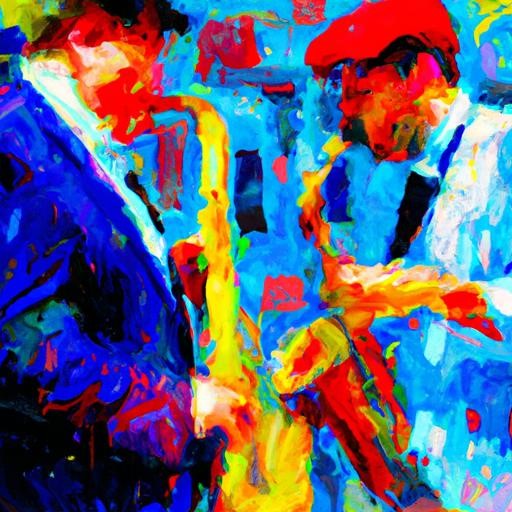
Writing music can be seen as a reflection of our capacity for free will. In philosophy, free will is regarded as the ability of an individual to make decisions without the constraints of certain factors. Free will is usually countered by determinism, the philosophical idea that every event or state of affairs, including every human decision and action, is the inevitable and necessary consequence of antecedent states of affairs.

In the process of creating music, a composer seems to have unlimited possibilities, choosing notes, rhythms, timbres, dynamics, and structure. These choices could be seen as displays of free will due to their seemingly unconstrained nature. The resulting piece of music represents the composer's unique decisions and ideas, seemingly proving that they are a free entity, capable of making choices unconstrained by external factors.

However, upon closer examination from a deterministic perspective, it could be argued that a composer's choices aren't as free as they initially appear. Factors such as their musical training, exposure to certain styles of music, their personal experiences, their cultural background, and even their genetic predisposition to appreciate and understand music, can all play a significant role in influencing their musical decisions. These factors could be seen as the 'antecedent states of affairs' that determinism refers to.

So, even if humans do not have free will, the process of creating music can still be understood. From a deterministic standpoint, the composition process is an output resulting from various inputs such as musical education, cultural influences, personal emotions, and experiences. This doesn't undermine the beauty and mystery of music creation. Instead, it provides a different lens to view and appreciate the interconnectedness of factors that culminate in the creation of a unique piece of music.
The Case for Free Will
Music, in its vivid and dynamic expression, can reveal much about the human experience of free will. Philosophers committed to the premise of free will posit that the act of music creation stands as an embodiment of free agency and conscious choice.

Underlined by the philosophy of existentialism, the concept of free will is central to understanding our very existence as human beings. Jean-Paul Sartre, an important figure in this school of thought, conceived humans as beings "condemned to be free," and this freedom enables us to shape our own existence through our actions.

In the realm of music, the act of composing showcases this existential freedom. From the choice of the musical key, progression of chords, rhythm, melody, to the lyric (if any), every aspect of music creation represents a decision made by the composer. Thus, in the same way Sartre implies that our actions map out our existence, so does a composer maps out their piece of music.

Furthermore, music often acts as a medium for expressing emotions, ideas, and personal narratives. For instance, a musician may harness their experiences or express their emotions to create music, reflecting their personal choice to transform subjective mental states into tangible auditory reality.

Similarly, Robert Kane, a contemporary American philosopher committed to the notion of free will, argues that free will is manifested in “self-forming actions” where one's decisions shape one's character. In this sense, the act of composing music can be seen as a “self-forming action,” as it represents the composer's distinctive style and preferences, thus contributing to their artistic identity.

Moreover, according to the libertarian perspective proposed by philosophers like Roderick Chisholm, even if our choices are influenced by past events or inherent tendencies, it's still us as agents who make the final decisions. Composing music embodies this philosophy, as even inspired compositions stemming from cultural backgrounds or personal experiences still reflect the original, independent choices of the artist.

Therefore, reiterating Sartre's statement, "we are our choices," in the context of music, we might say, "a piece of music is the choices its composer makes." This provides a compelling illustration of free will as a domineering component of our consciousness and individuality.
The Case for Determinism
Writing music is an intricate process containing a multitude of decisions such as melodic, harmonic, and rhythmic choices, orchestration, dynamics, etc. Determinists may view these decisions as not truly ours, but influenced by a complex set of environmental, cultural, and biological factors that we are largely unaware of.

Determinism, as Kant would tell us, is a viewpoint that all events, including human action, are ultimately determined by causes external to the will. Our actions are thus, invariably the products of the fixed natural laws and the chain of causality.

Let's interpret this in the context of music composition. The 'free' choices we make when composing a piece do not exist in a vacuum; they are often deeply rooted in our lived experiences, our understanding of music theory, and the cultural context in which we exist.

Consider Daniel Dennett, a contemporary philosopher renowned for his contribution to the free will debate. Dennett argues for a form of determinism called "compatibilism". He suggests that even if our actions are fundamentally driven by previous states of the world and the laws of physics (determinism), this does not negate the existence of freedom and responsibility. Our decisions are still ours because they arise from our desires, values, and rational deliberations, which shaped by a mixture of genetics and experiences, are unique to us.

Let's apply this to a composer. While the deterministic forces (genetics, environment, and previous experiences) contribute to shaping the tastes, style, and skills of a composer, it doesn't negate the fact that it is their unique amalgamation of these influences that productively influences the music they create. The chain of causality does not undermine the authenticity of the process, but simply underlines the complexity that feeds into it.

In conclusion, writing music can indeed be perceived through the lens of determinism. Even though the melodies and harmonies chosen by a composer may seem like products of free will, we cannot ignore the deterministic factors that shape these choices. Although this perspective may appear to diminish the magic of musical creation, it instead brings to light the remarkable intricate mesh of influences that make each composer and each piece of music so distinct. Thus, even in a deterministic view, the uniqueness and individuality of the human experience, as reflected in the music we create, remains intact.
Written by OpenAI GPT-4


 Realizing News
Leave a comment