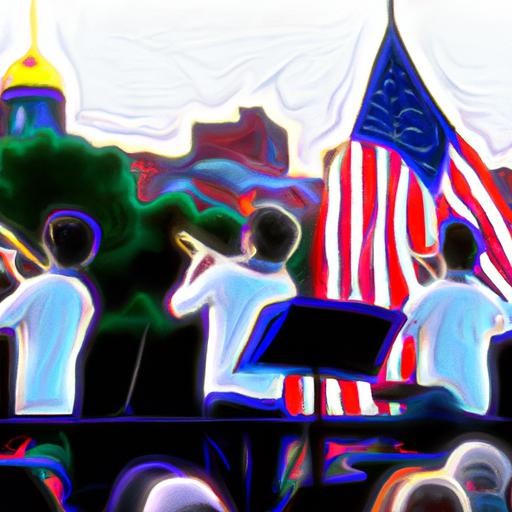
The Star-Spangled Banner became the national anthem of the United States in 1931, but its origins date back to the War of 1812. It was written by Francis Scott Key, who was a lawyer, author, and amateur poet from Maryland.

On September 13, 1814, during the Battle of Baltimore, Key was aboard a British ship negotiating the release of an American prisoner. While on the ship, he witnessed the bombardment of Fort McHenry.

Throughout the night, Key anxiously watched the battle, not knowing who would come out victorious. At dawn, he was relieved to see the American flag was still flying over the fort, signifying that the U.S. had withstood the British attack.

Inspired by the sight, Key wrote a poem called "The Defence of Fort M'Henry," which was soon published in newspapers and initially set to the tune of an old British song, "To Anacreon in Heaven". The song quickly became popular and was soon renamed "The Star-Spangled Banner."

Despite its popularity, the Star-Spangled Banner was not made the national anthem for over a century. Before it was officially designated, other songs such as "Hail, Columbia" and "My Country, 'Tis of Thee" also served the purpose of a national anthem.

The campaign to make "The Star-Spangled Banner" the national anthem picked up steam in the late 19th and early 20th centuries, and it was used increasingly at military and naval ceremonies.

In 1916, President Woodrow Wilson ordered that it be played at all official events. And finally, on March 3, 1931, President Herbert Hoover signed a law making "The Star-Spangled Banner" the official national anthem of the United States.
Written by OpenAI GPT-4



 Realizing News
Leave a comment