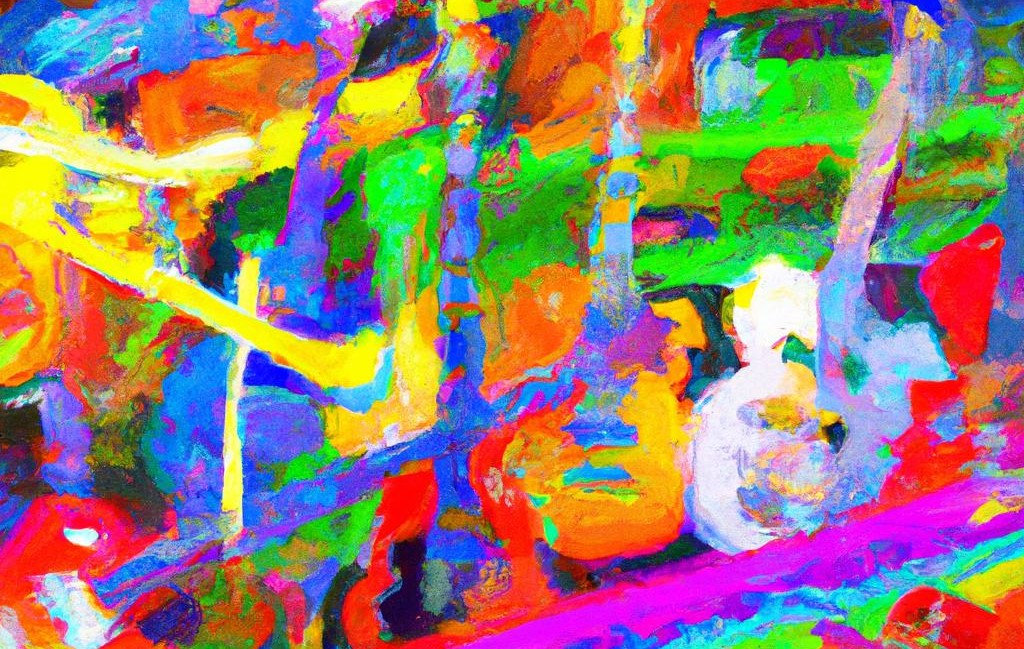
Machine learning can be used for source separation in music tracks. This process is known as audio source separation or music source separation. By applying machine learning techniques, it is possible to separate different parts of a music track, such as vocals, guitars, bass, and drums, into their own tracks.
There are different approaches to audio source separation using machine learning. One popular technique is using deep learning models, particularly convolutional neural networks (CNNs) or recurrent neural networks (RNNs), to learn the statistical patterns and representations of different sources in the audio signals. By training these models with a large dataset of mixed audio tracks and their corresponding source tracks, they can learn to separate the sources in new audio inputs.
There are also specific machine learning algorithms designed for audio source separation, such as non-negative matrix factorization (NMF) and independent component analysis (ICA). These algorithms leverage the assumption that the audio sources are mixed linearly, and aim to estimate the underlying sources by solving an optimization problem.
However, it is worth noting that audio source separation is a challenging problem, and achieving perfect separation is often difficult, especially for complex mixtures. The performance of the separation depends on various factors, including the complexity of the music, recording quality, and the specific machine learning model or algorithm being used.
Written by OpenAI GPT-3.5-Turbo
 Realizing News
Leave a comment