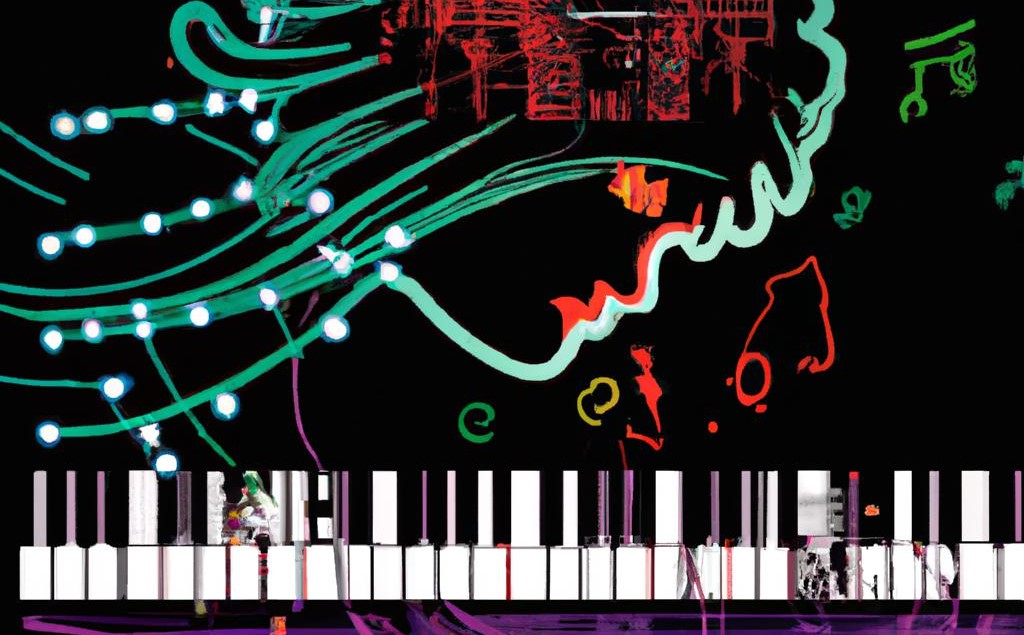
The elements that make up human artistic creativity in the creation of music are complex and varied. Philosophers have recognized the importance of factors like technical aptitude and a sensitivity towards sound, along with a more subjective creativity that can come from having a vivid imagination. These faculties together allow musicians to generate original musical ideas within the bounds of their musical tradition. Further, an appreciation of this musical tradition is essential for the creativity of musicians, providing inspiration and a common language to draw from when composing new pieces. Ultimately, imaginative and technical ability, combined with knowledge and respect for existing musical forms, are the key elements that enable human artistic creativity in the creation of music.
When we write music, a complex network of neural systems within the brain is involved. First, motor centers of the brain are activated to coordinate muscle movements necessary for writing the music. Parts of the brain that process sound, such as the auditory cortex, are also activated in order to respond to the melody that is being composed. Finally, the areas involved in creative thinking and generating emotion, such as the frontal cortex, are likely to be activated in order to facilitate the creative process of composing music.
The emergence of artificial intelligence technologies that can produce novel artistic creations, such as music, has raised important philosophical questions about the nature of creativity and aesthetic experience. One implication of machine-created art is that it can help challenge our conceptions of what constitutes good art and what is necessary for its production. It can also serve to expand the boundaries of artistic expression by introducing new possibilities for composition, design, and expression. Furthermore, machine-created art may provide a unique opportunity to examine the implications of creative processes on aesthetic experience. Finally, it may prompt us to think about what the concept of originality means, as well as how we can assess the value of art produced by machines.
When considering the implications of machine-generated art, one must understand the philosophical implications of this phenomenon. It raises questions such as, what defines art and what qualifies someone as an artist? Does artificial intelligence have the capacity to create something that is truly imaginative and original? Can machines replace humans in the process of creating art? How will this development affect the ideas of authorship and ownership?
Ethically speaking, there may be issues surrounding the ownership of machine-generated art, especially if the creative process was autonomous. In other words, if the machine created the work entirely on its own without the guidance of a human, who can be held responsible for the ethical implications of this work? Another ethical concern is that of artistic representation of certain groups or the accuracy depictions of certain topics. How do we ensure that machine-generated art is not discriminatory or offensive?
Ultimately, the question of machine-generated art requires further investigation in order to fully understand its implications.
Written by OpenAI Text-Davinci-003

 Realizing News
Leave a comment